
As an Amazon Associate, Outwatt earns from qualifying purchases.
Compressor vs Thermoelectric Portable Fridges: What the Specs Actually Say
Walk into any outdoor retailer and you’ll see two kinds of 12V “fridges” sitting side by side: compressor fridges that cost $200 to $1,000+, and thermoelectric coolers for under $100. They look similar. They are not similar. The difference isn’t branding — it’s physics, and the spec sheets tell the whole story.
We don’t do hands-on testing at Outwatt. What we do is read the published specs carefully and explain what they mean for your trip. Here’s the honest breakdown.
How a compressor fridge works (and what it costs to run)
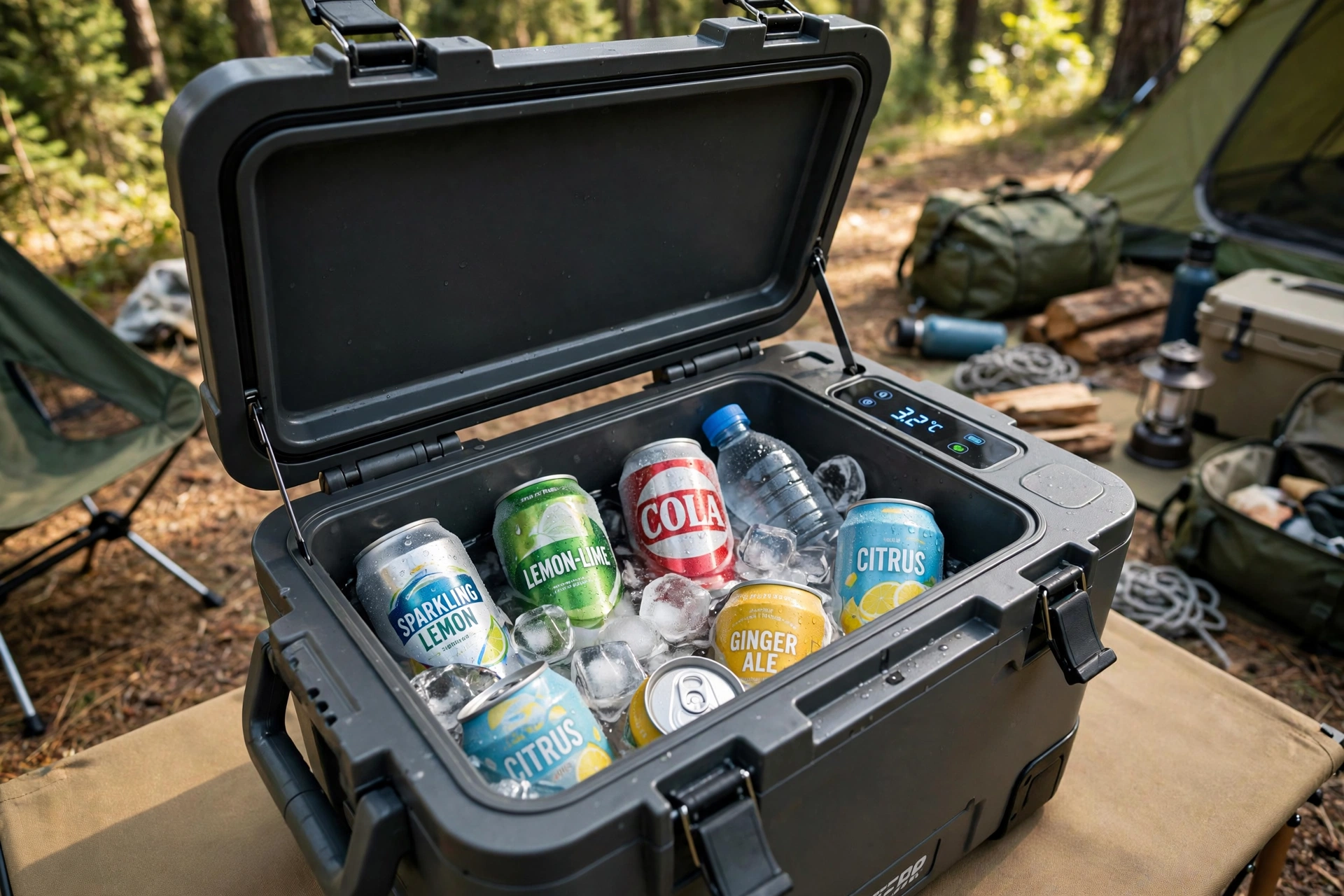
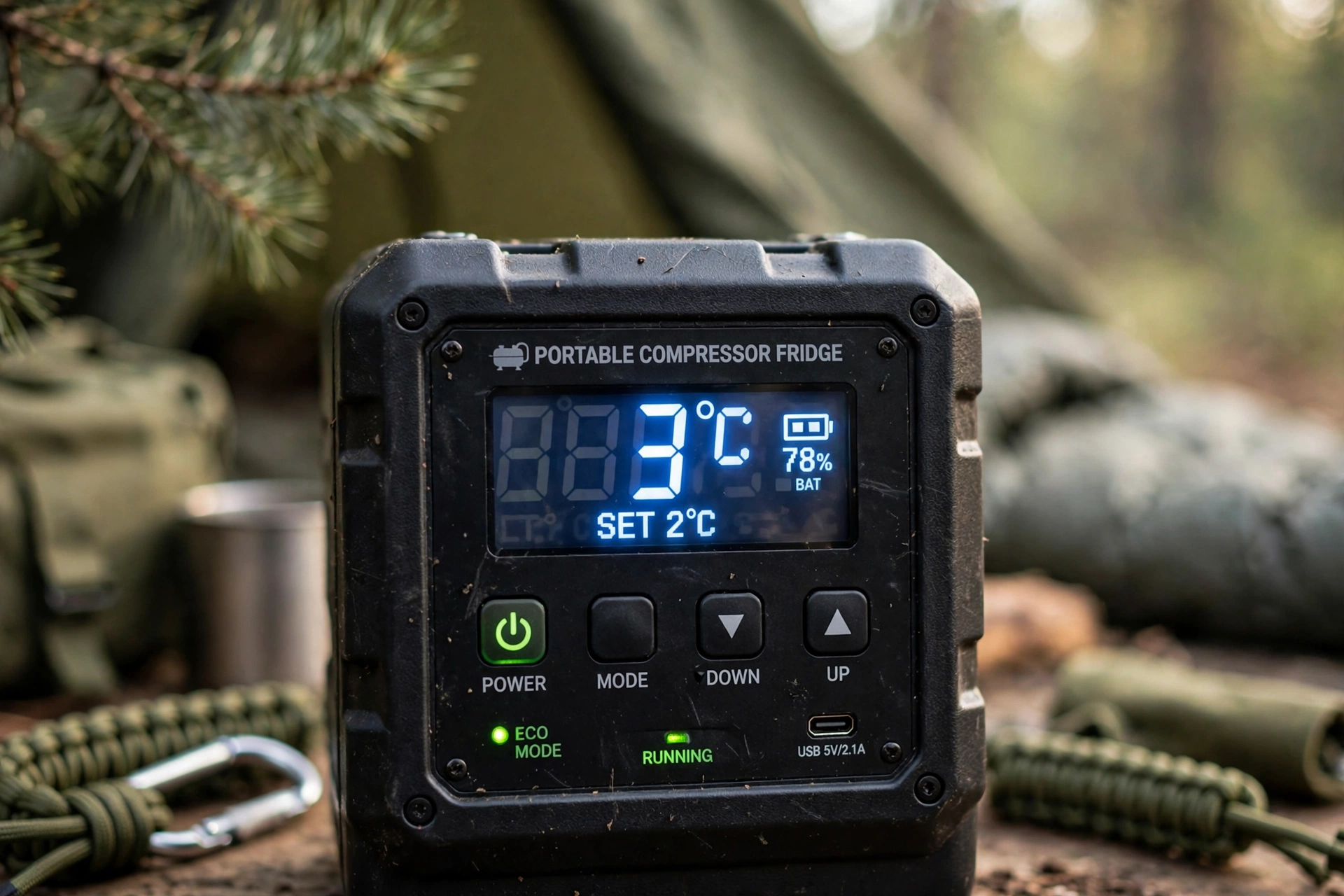
A compressor fridge works like the refrigerator in your kitchen: a small compressor circulates refrigerant, and a thermostat cycles it on and off. Take the Dometic CFX3 25 — a 25-liter single-zone unit. Its published specs: rated input power of 46W, energy consumption of 0.92 Ah/h at 12V (measured at 4°C interior, 32°C ambient), and a temperature range down to -22°C.
That last number matters. A compressor fridge doesn’t care what the weather is doing. Set it to -22°C and it will freeze your ice cream in the desert. The thermostat means it cycles: it runs hard to pull down, then sips power to maintain. That 0.92 Ah/h figure is the average — the compressor isn’t drawing 46W continuously.
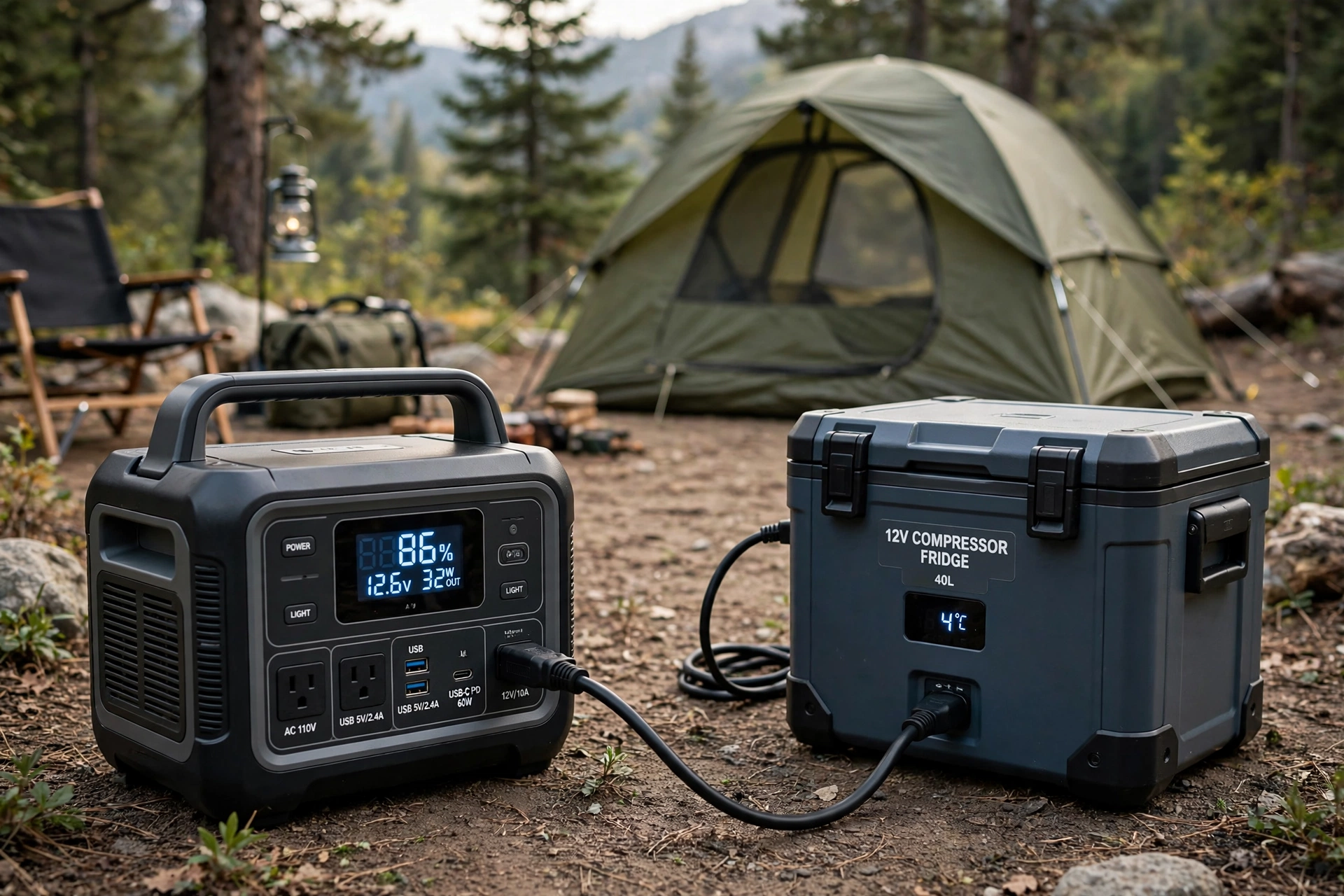
Power options are flexible too: 12/24V DC for the car, 100-240V AC for the campground pedestal, and it can run off solar with the right setup. A 3-stage battery protection system keeps it from killing your starter battery.
How a thermoelectric cooler works (and where it falls short)
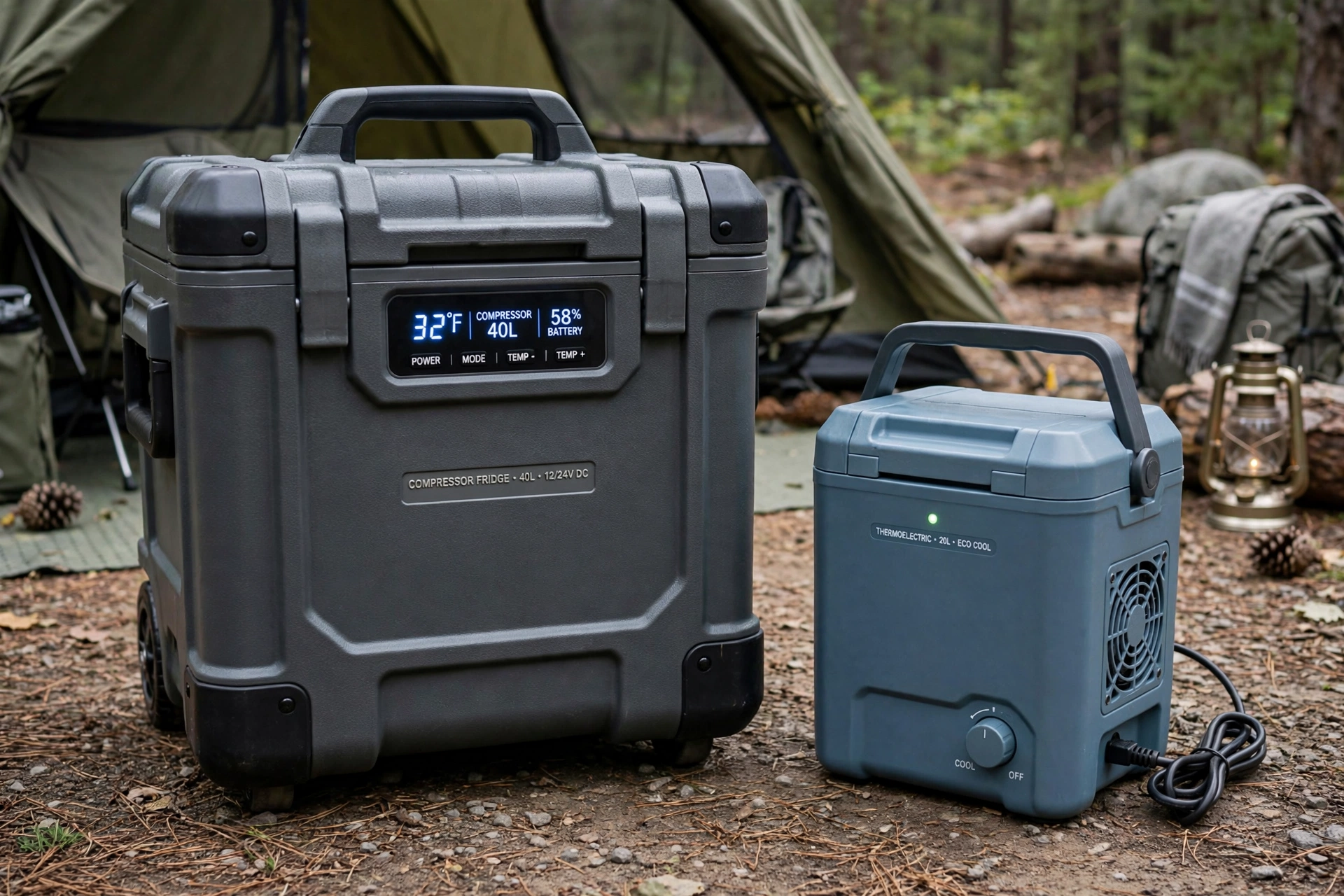
A thermoelectric cooler uses a Peltier element — a solid-state heat pump with no moving parts except a fan. It’s cheap, light, and simple. But the physics are unforgiving: a thermoelectric cooler can typically only maintain temperatures about 35-40°F below ambient.
Do the math on a 95°F summer day. Your cooler interior sits in the high 50s — fine for keeping drinks cool, not safe for raw meat or dairy over multiple days. And it gets worse: there’s no thermostat. The unit runs constantly, drawing around 4-5 amps the entire time it’s plugged in. Leave it overnight on your car battery without a dual-battery setup or solar input, and you may not start the car in the morning.
Thermoelectric coolers are only advisable in temperate climates where daytime temperatures stay under about 75-80°F. In those conditions they’re genuinely useful — quiet, cheap, and better than a bag of melting ice for a day trip.
Side-by-side: the numbers that matter
| Compressor fridge | Thermoelectric cooler | |
|---|---|---|
| Cooling method | Vapor-compression (refrigerant) | Peltier solid-state element |
| Min temperature | Down to -22°C regardless of ambient (Dometic CFX3 spec) | ~35-40°F below ambient only |
| Thermostat | Yes — cycles on/off | No — runs constantly |
| Typical draw | ~0.92 Ah/h average at 12V (Dometic CFX3 25) | ~4.5A continuous |
| Overnight on car battery | Safe with battery protection | Risky — can drain a starter battery |
| Freezing | Yes, true freezer performance | No — cannot freeze |
| Price range | $200-$1,000+ | Under $100 |
Which one should you buy?
Buy a compressor fridge if: you camp in hot weather, you need to keep food safe for multiple days, you want to freeze anything, or you’re pairing it with a portable power station for off-grid trips. The upfront cost stings, but it’s the only option that works like a real refrigerator.
Buy a thermoelectric cooler if: you do mild-weather day trips, you just want cold drinks (not food safety), and you’re on a tight budget. Keep it simple: use it in spring and fall, not August in Arizona.
One more thing worth knowing: compressor efficiency varies by design. Variable-speed compressors (like Dometic’s VMSO3) work harder in heat to pull down fast, then cycle off — which actually reduces average power draw over 24 hours compared to a fixed-speed unit grinding constantly. If you’re sizing a power station to run your fridge, that cycling behavior is what makes multi-day off-grid refrigeration practical. Our Camp Kit Planner can help you match fridge power draw to the right station.
The bottom line
This isn’t a close call for most campers. A thermoelectric cooler is a $70 gadget; a compressor fridge is an appliance. If your trips involve real heat, real food, or more than one night, the compressor wins on every spec that matters — temperature range, power efficiency, and food safety. Buy the thermoelectric only when you know exactly why it’s enough.
Want to see how specific models stack up? Check our camp stove fuel guide next — because once your food is cold, you’ll want to cook it right too.
1 thought on “Compressor vs Thermoelectric Portable Fridges: What the Specs Actually Say”
Comments are closed.