
As an Amazon Associate, Outwatt earns from qualifying purchases.
The Camp Kitchen Packing Checklist: Everything You Need, Nothing You Don’t
Every camper has a story about the forgotten item. The can opener. The lighter. The coffee. This checklist exists so you don’t become the story. It’s organized by category, built for car camping and adaptable for backpacking — just strike what doesn’t fit your trip.
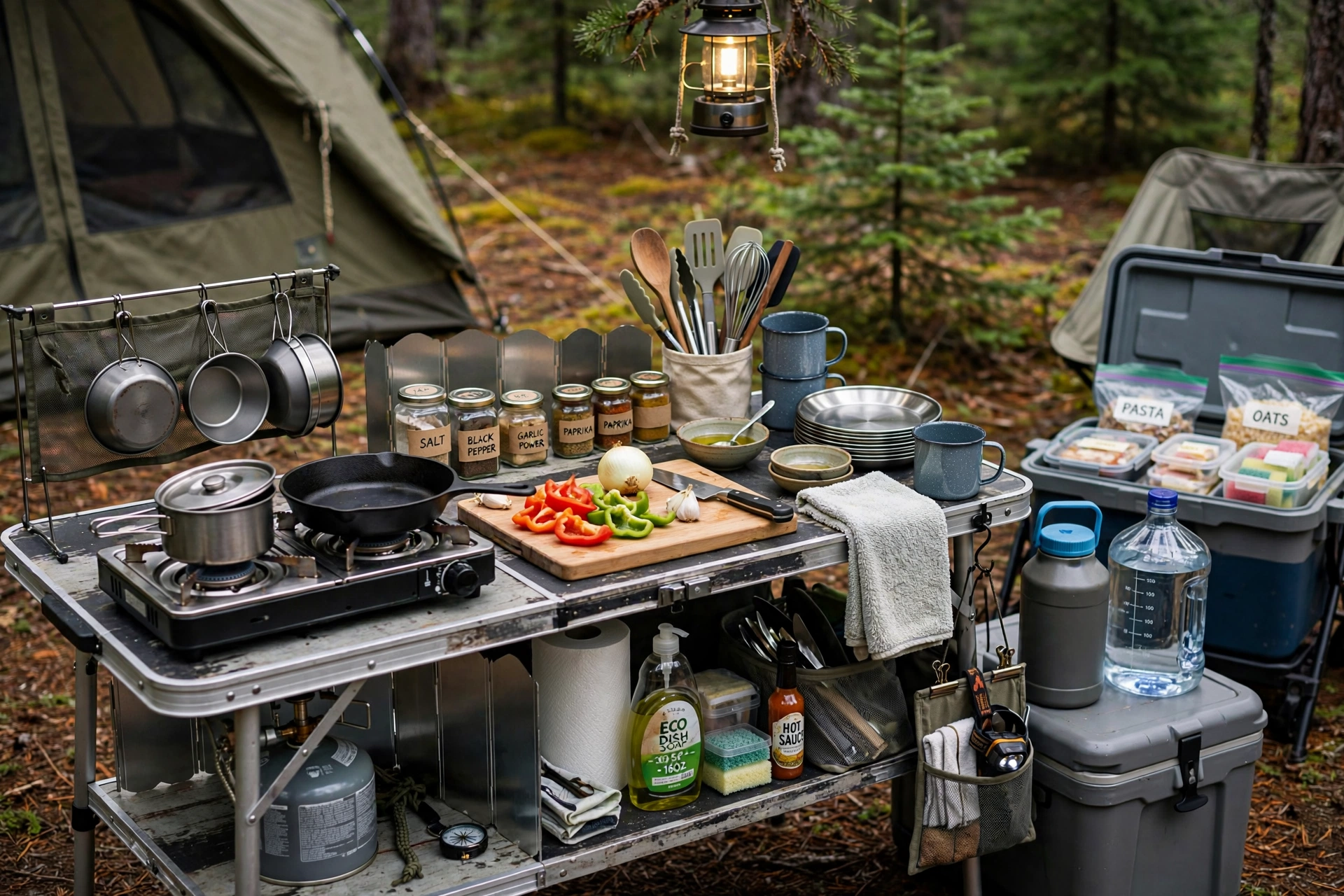
Cooking: stove, fuel, and fire
- Camp stove (two-burner for car camping, canister stove for backpacking)
- Fuel — and a spare. See our fuel types guide to match fuel to the forecast
- Lighter + waterproof matches (bring both; lighters fail)
- Firestarter (for campfire cooking)
- Windscreen for the stove
The fuel rule: one full canister per person per 3-4 days of backpacking, or one 1-lb propane bottle per weekend for a two-burner car-camping stove. Always pack a spare — running out mid-trip is the most preventable kitchen failure there is.
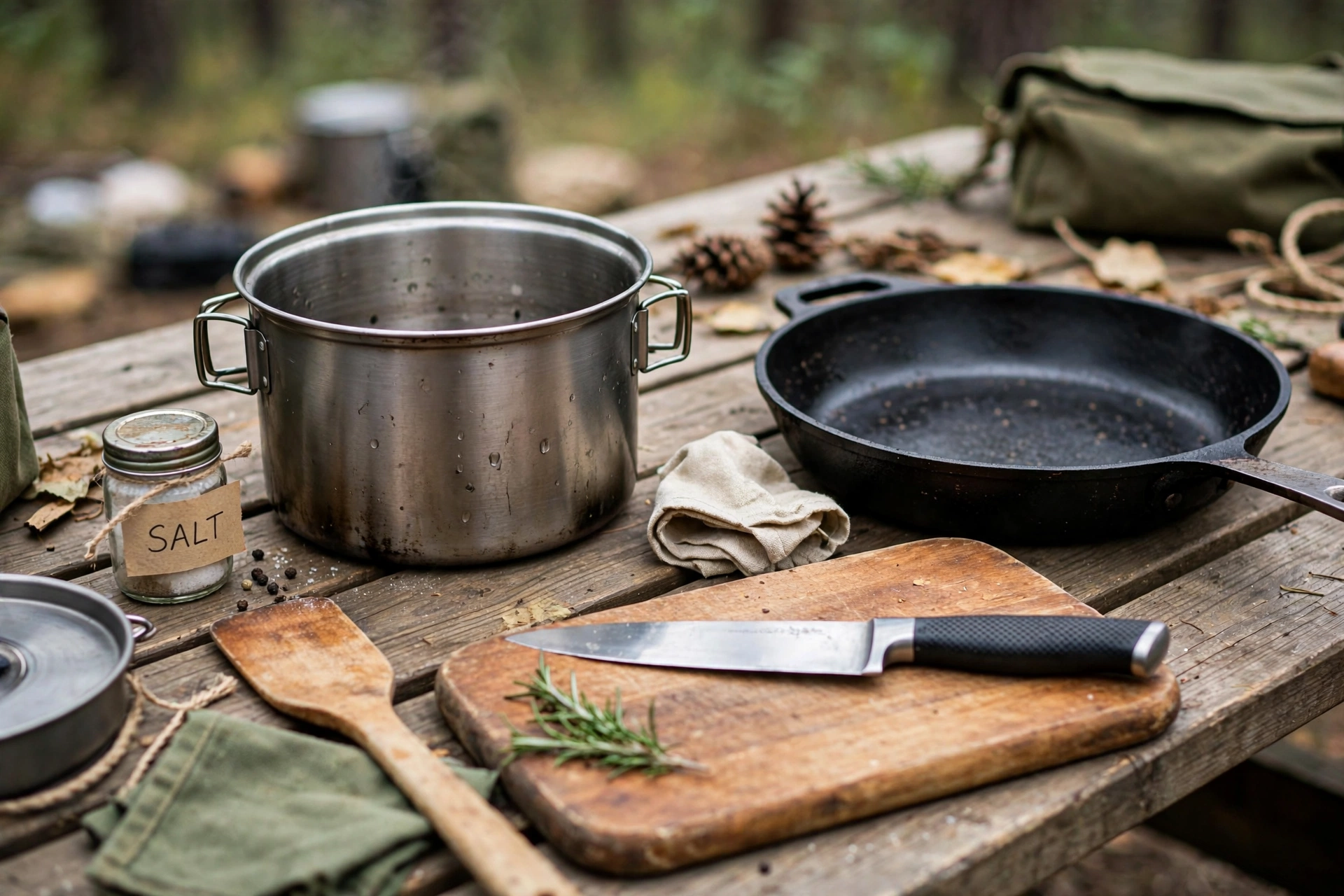
Cookware and tools
- Pot + lid (1.5-2L covers most camp meals)
- Frying pan (if you actually fry things — be honest)
- Spatula, wooden spoon, tongs
- Sharp knife + small cutting board
- Can opener (the forgotten classic)
- Measuring cup (doubles as a mug in a pinch)
- Pot holder or heat-resistant gloves
- Collapsible sink or wash basin
Eating and drinking
- Plate/bowl per person (one deep bowl beats a flat plate for camp food)
- Mug per person (insulated if you drink slow)
- Fork, knife, spoon per person
- Water bottles + a large water jug for camp
- Water filter or purification (for backcountry)
- Cooler or 12V fridge — our fridge guide explains which type fits your trip
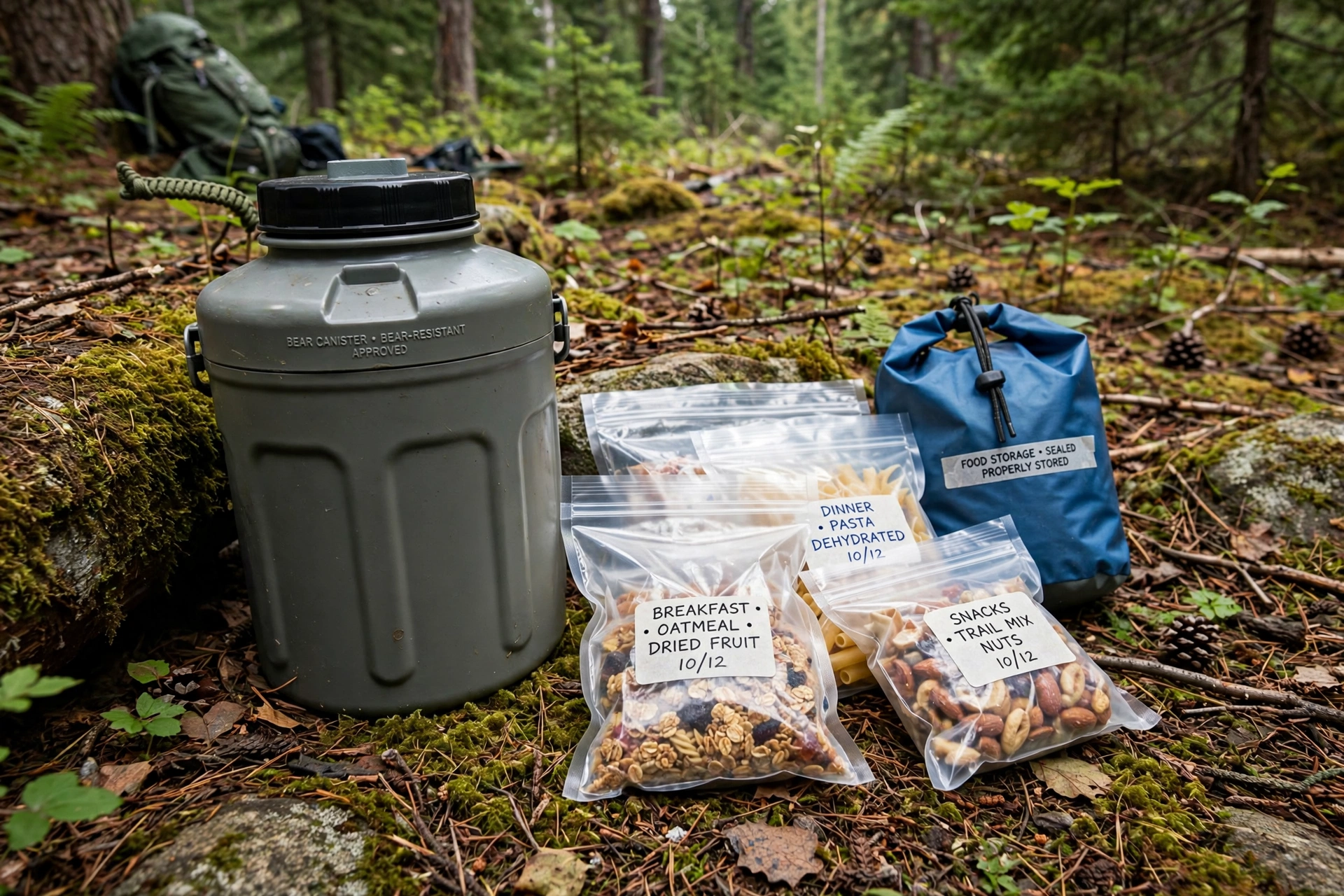
Food storage and safety
- Bear canister or hang kit (where required)
- Resealable bags and containers
- Trash bags (pack it in, pack it out — plus one extra)
- Paper towels / camp towel
- Food thermometer (for meat safety on long trips)
In bear country, this category isn’t optional — it’s the law in many parks. Check regulations before you go; fines are real and rangers do check.
Cleanup
- Biodegradable camp soap (a few drops go a long way)
- Sponge or scrub pad
- Dish towel (quick-dry, not cotton)
- Collapsible drying rack or clean bandana
- Small bottle of hand sanitizer
Leave No Trace note: wash dishes at least 200 feet from water sources, and scatter strained dishwater broadly. Never pour food scraps into a lake or stream.
Power for the kitchen
- Portable power station (sized to your fridge + devices — try our Camp Kit Planner)
- Charging cables (USB-C, Lightning, whatever your gear needs)
- Headlamp + lantern (one per person for the headlamp)
- Solar panel (optional, for trips over 3 days)
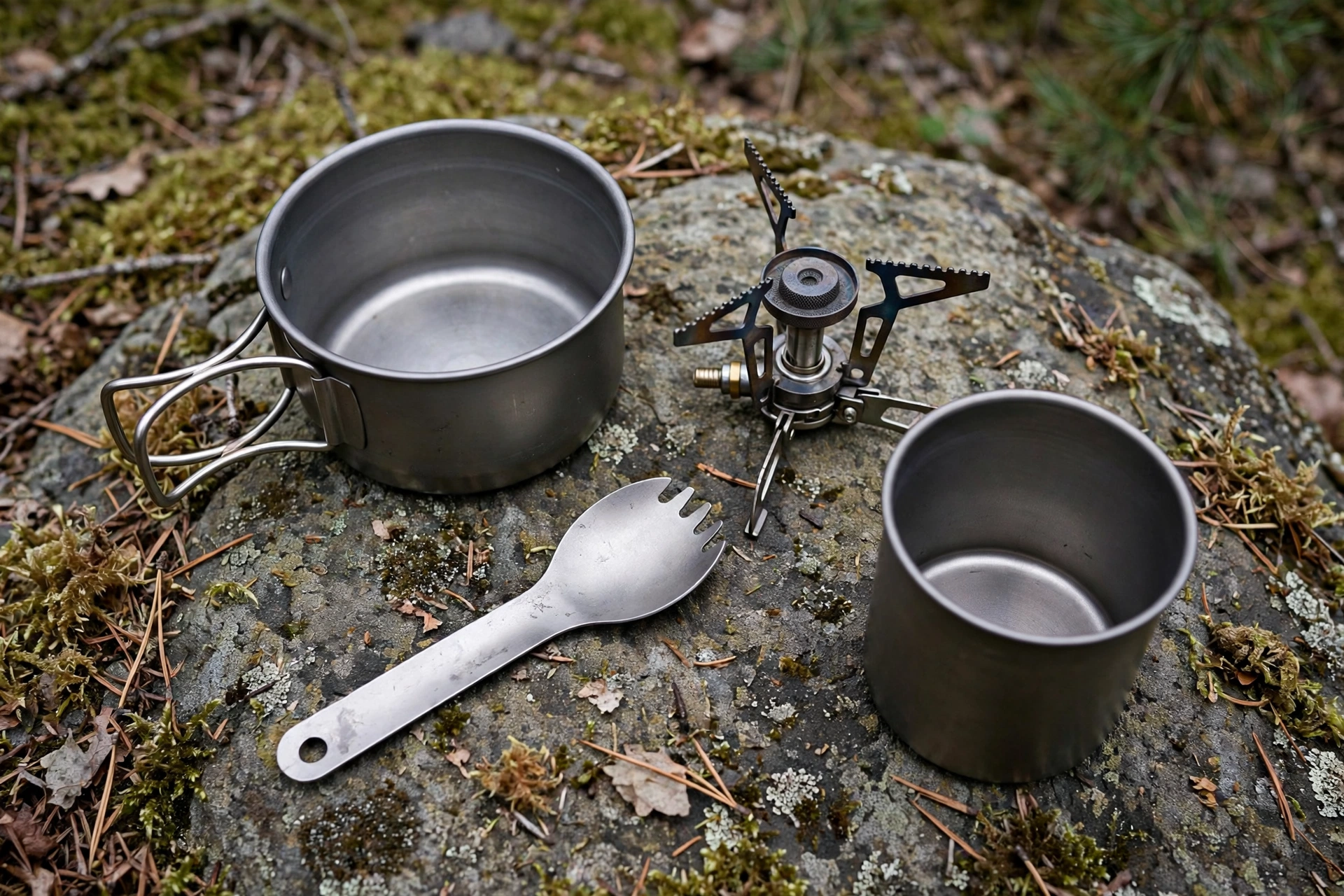
Backpacking: what to cut
Taking the kitchen on your back? Cut ruthlessly:
- One pot, one spork, one mug — that’s the whole kit
- Canister stove + one fuel canister (fresh, not half-used)
- Skip the frying pan, the cutting board, and the spice rack
- Water filter replaces the jug
- No cooler — eat shelf-stable food or embrace the hunger
The bottom line
Print this list. Check things off as they go into the bin. The goal isn’t to bring everything — it’s to never forget the thing that ruins dinner. After a few trips, you’ll develop your own permanent camp-kitchen box that lives packed and ready. That’s the real checklist: the one you stop thinking about.