
As an Amazon Associate, Outwatt earns from qualifying purchases.
Camp Stove Fuel Types Explained: Propane vs Butane vs White Gas
Your stove worked fine in July. In October, the same stove sputters and dies on a full canister. Nothing is broken — the fuel is doing exactly what its boiling point says it will do. Once you understand the three main camp stove fuels, you’ll never get caught cold again.
We don’t test stoves at Outwatt. We read spec sheets and explain the chemistry. Here’s what matters.
The one number that matters: boiling point
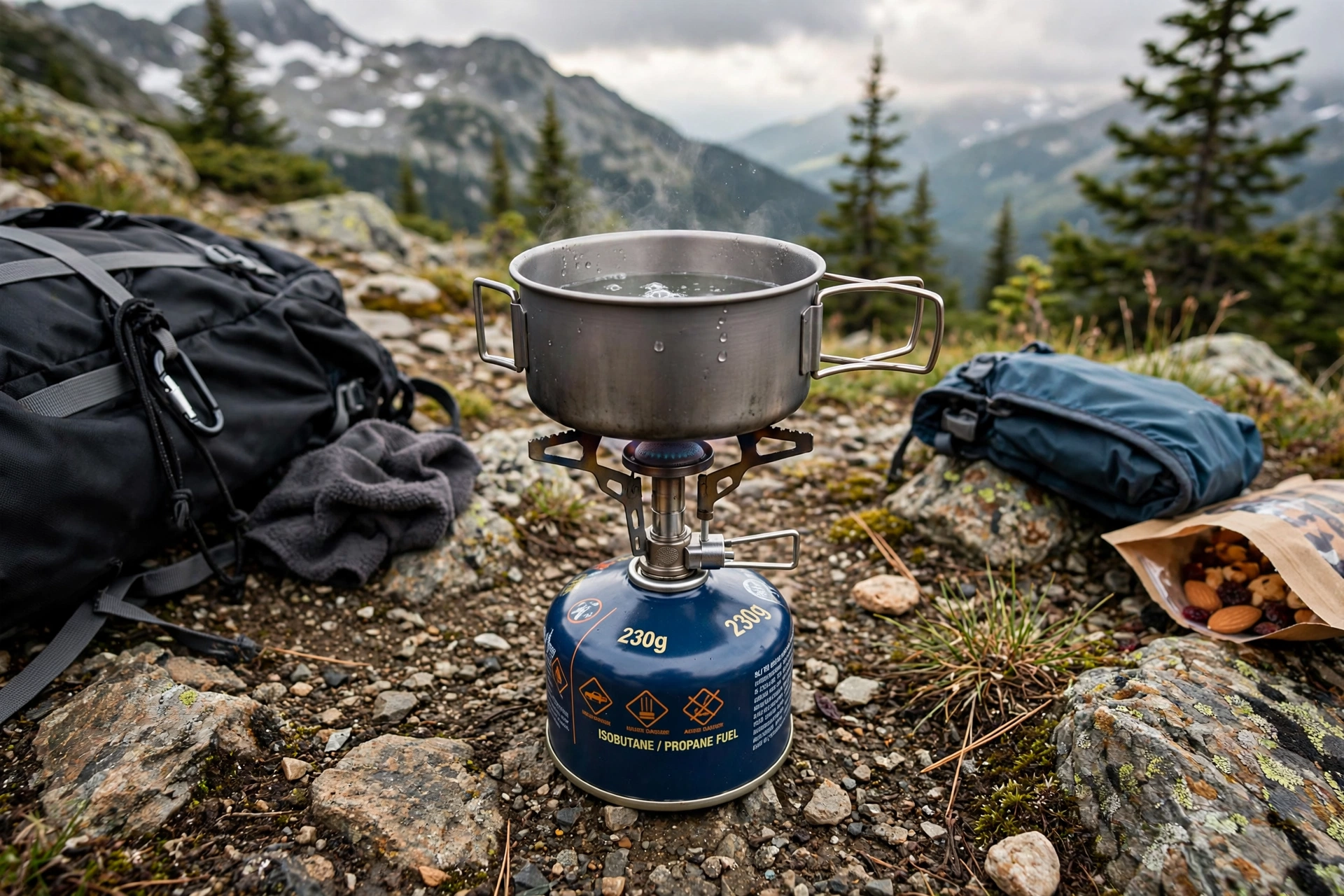
A canister stove needs gas, not liquid, reaching the burner. Each fuel vaporizes (boils) at a different temperature at sea-level pressure:
- Butane: 31°F (0°C)
- Isobutane: 11°F (-12°C)
- Propane: -44°F (-42°C)
Below its boiling point, the fuel stays liquid in the canister. No vapor, no flame — no matter how full the canister is. That sloshing sound on a cold morning? That’s liquid fuel that refuses to become gas.
Canister fuel: it’s always a blend
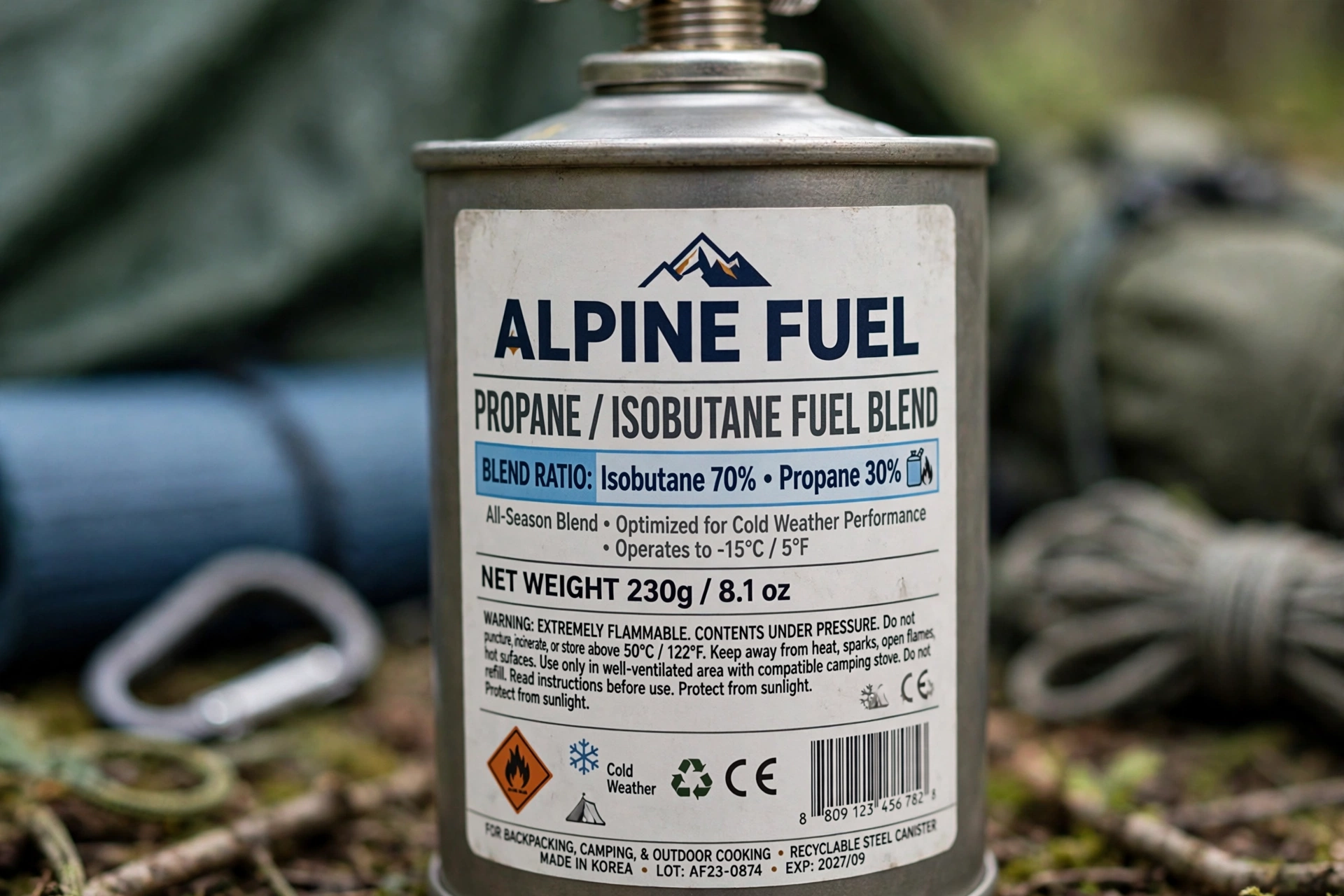
Here’s what most campers miss: you almost never buy pure anything. Backpacking canisters contain a blend — typically 80% isobutane and 20% propane in the US. Why not 100% propane, the cold-weather champion? Pressure. At 70°F, propane’s vapor pressure is about 110 psi, versus 30.7 psi for isobutane and just 17 psi for butane. A thin, lightweight backpacking canister can’t safely contain pure propane at summer temperatures. US safety standards cap the propane fraction, which is why the heavy 1-lb green propane bottles have such thick walls.
The blend creates a nasty trap in cold weather: the propane burns off first (it vaporizes easiest), leaving you with a canister that’s increasingly pure isobutane — then increasingly useless as temperatures drop. A half-used canister performs worse in the cold than a full one, even though it still sloshes.
Coleman-brand canisters use a butane/propane mix rather than isobutane/propane. Butane’s 31°F boiling point means Coleman fuel gives up even earlier in the cold. Fine for summer car camping; a poor choice for shoulder seasons.
White gas: the cold-weather king
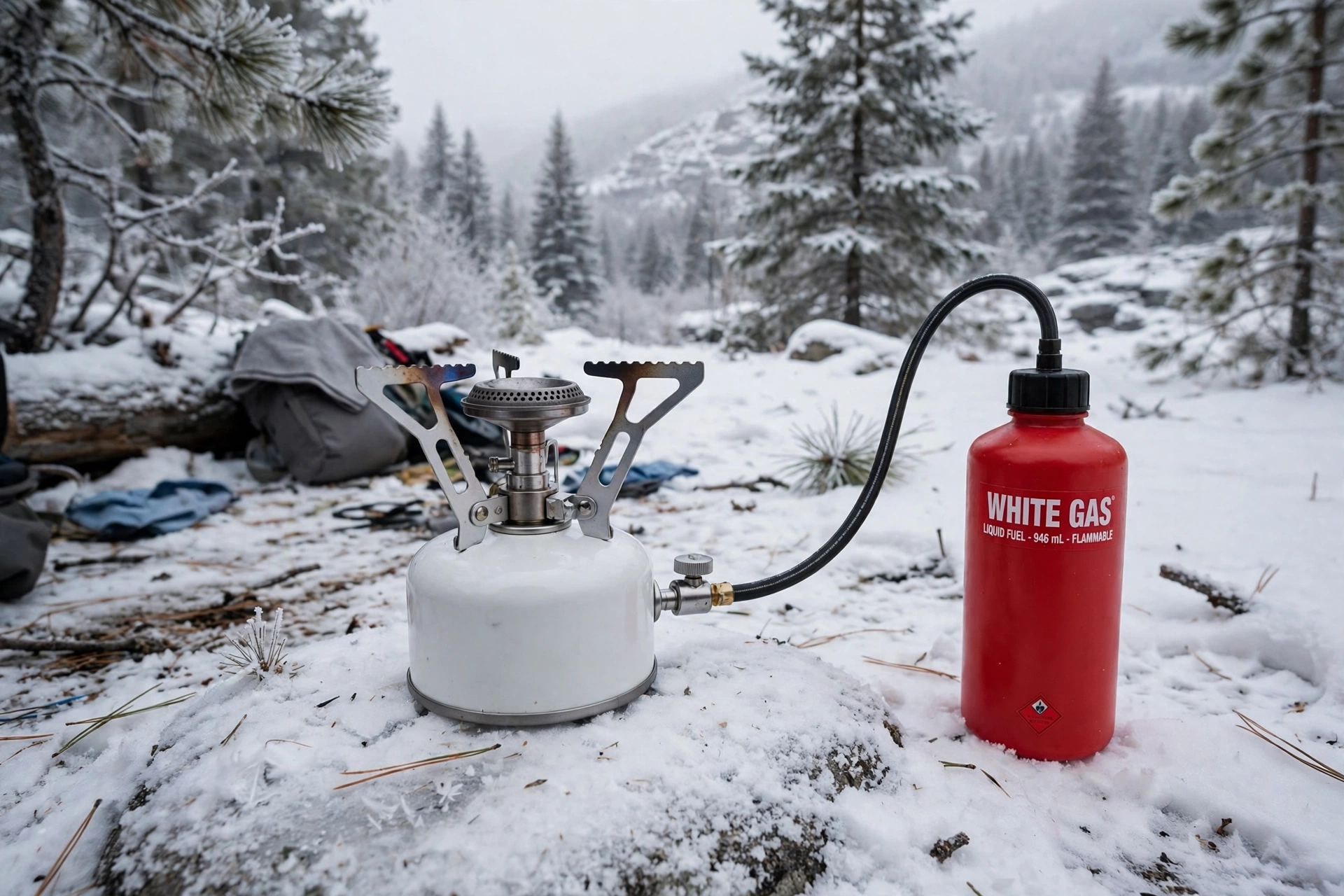
White gas (naphtha, sold as Coleman fuel) is a liquid you pour into a refillable tank and pressurize with a pump. Because you’re feeding liquid to a preheated generator that vaporizes it at the burner, ambient temperature barely matters. White gas stoves light and run in conditions that shut down every canister stove made.
The trade-offs are real: white gas stoves are heavier, fussier (priming, pumping, maintenance), and the fuel doesn’t store indefinitely once opened — Coleman recommends using a partially used can within a year or two. Spills smell, and you can’t fly with it. But for winter camping, mountaineering, or melting snow, it’s the standard for a reason.
Propane: the car camper’s workhorse
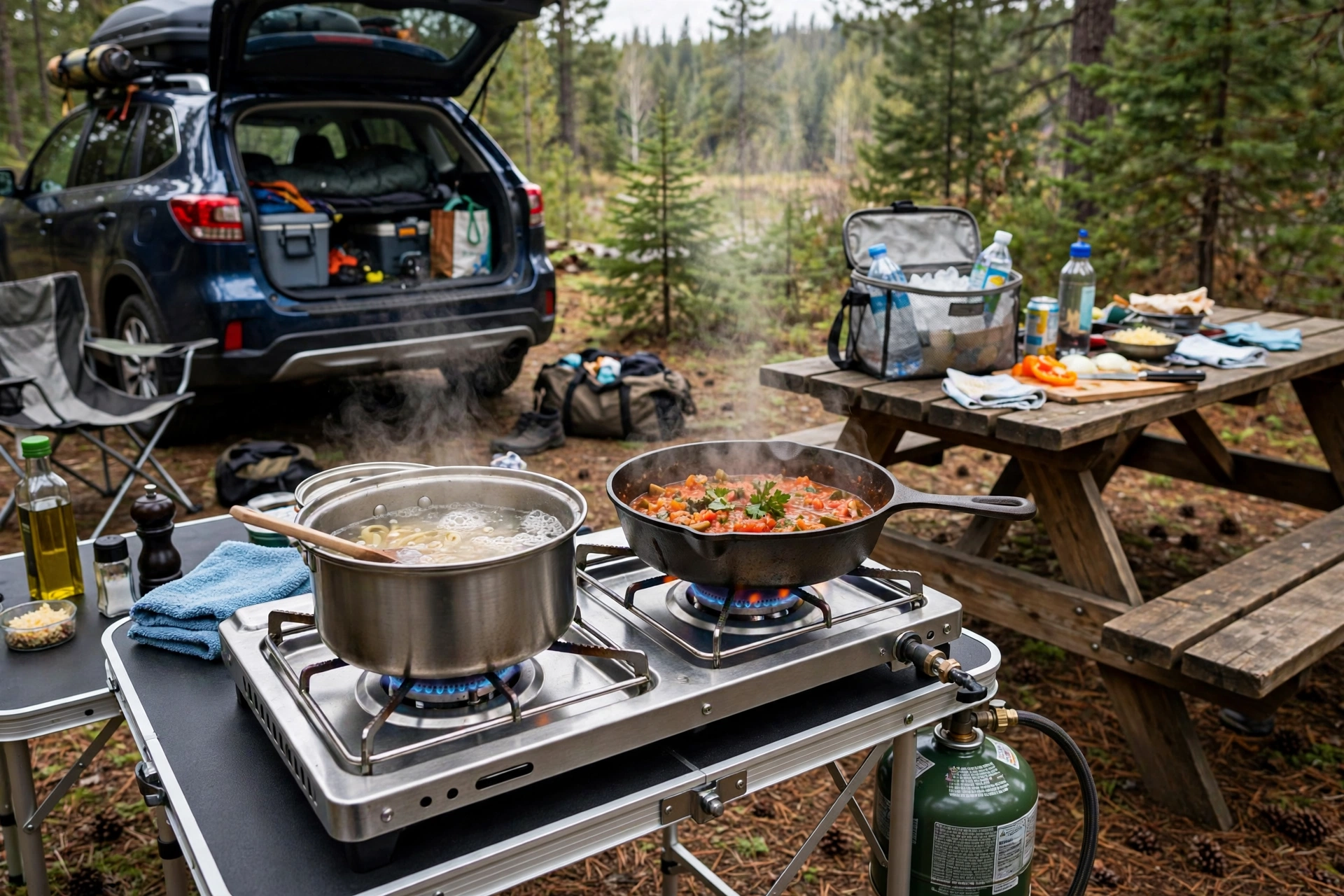
The 1-lb green propane bottles (and their refillable 5-lb and 20-lb big brothers) are the default for car camping, and for good reason. Propane vaporizes down to -44°F, so cold is never the issue. Bottles are cheap, available everywhere, and the stoves are dead simple — screw on, turn the knob, light.
The downside is weight and bulk. A 1-lb bottle is heavy for its energy, and backpackers rightly avoid them. But if you’re driving to camp, propane’s reliability is hard to beat. A 20-lb tank running a two-burner stove will cook for an entire season of weekend trips.
Quick-decision guide
| Fuel | Cold limit | Best for | Watch out for |
|---|---|---|---|
| Isobutane/propane canister | ~15-20°F practical | 3-season backpacking | Half-used cans fail first; Coleman butane blend quits near freezing |
| 1-lb propane bottle | -44°F | Car camping, any season | Heavy; not for backpacking |
| White gas | No practical limit | Winter, expeditions, snow melting | Heavier stove, priming ritual, fuel goes stale |
| Butane (tall skinny cans) | 31°F | Summer only, calm weather | Useless in cold; common in cheap tabletop stoves |
The bottom line
Match the fuel to the forecast. Summer backpacking? An isobutane/propane canister is perfect — just bring a fresh one, not the half-used can from last fall. Shoulder season or winter? Propane for the car, white gas for the pack. And if your stove ever “mysteriously” dies on a cold morning, check the thermometer before you blame the stove.
Keeping food cold matters as much as cooking it hot — see our compressor vs thermoelectric fridge guide to pick the right 12V fridge. And when you’re ready to pack it all up, our camp kitchen packing checklist makes sure nothing gets left behind.
2 thoughts on “Camp Stove Fuel Types Explained: Propane vs Butane vs White Gas”
Comments are closed.