
Disclosure: As an Amazon Associate, Outwatt earns from qualifying purchases. We compare published specs. We don’t test gear in a lab, and every figure below comes from the manufacturer.
Your sleeping bag gets the glory, but the pad does the insulating. Compressed insulation under your body does almost nothing. The pad is what stands between you and the cold ground. Pick the wrong one and you’ll shiver in a bag rated far below the nighttime low. Here’s what R-value actually means, the three pad types, and how to match a pad to your trips.

What R-value means
R-value measures resistance to heat flow. Higher number, warmer pad. The number comes from the ASTM F3340 standard, which means R-values from different brands are directly comparable. An R-4.5 from Therm-a-Rest and an R-4.5 from NEMO went through the same test.
Two reference points help. Sleeping bag temperature ratings are tested assuming an R-4.0 pad underneath, so a summer bag on an R-1.5 pad will feel colder than its rating suggests. And the scale isn’t linear in comfort terms: the jump from R-1 to R-2 matters more than the jump from R-5 to R-6, because the first doubling of insulation cuts heat loss in half.
Rough seasonal guide, per how manufacturers position their pads:
- Summer only (nights above 50°F / 10°C): R-1 to R-2 is enough.
- Three-season (spring through fall): R-3 to R-4.5 covers most trips.
- Winter and shoulder-season snow: R-5 and up, or layer two pads.
When in doubt, go warmer. A pad that’s slightly over-insulated for July still sleeps fine; a pad that’s under-insulated for October ruins the trip.
The three pad types
Air pads are inflatable chambers, sometimes with reflective layers or synthetic insulation inside. They pack the smallest and feel the most like a mattress. The tradeoff is vulnerability: one sharp rock can end the night, so they ship with repair kits and reward careful site selection.
Self-inflating pads combine open-cell foam with an airtight shell. Open the valve and the foam expands, drawing air in. They’re heavier and bulkier than pure air pads but nearly indestructible in normal use, and the foam gives insulation even if punctured.
Closed-cell foam pads are just foam: no air, no valve, nothing to break. They strap to the outside of a pack, double as a sit pad around camp, and cost a fraction of inflatables. The tradeoff is comfort: three-quarters of an inch of foam is honest but thin, and they pack like a bedroll.

How to choose
Start with R-value for your coldest expected night, then filter by the rest.
Weight and packed size decide themselves by trip type. Backpackers count ounces. A 13-ounce pad versus a 25-ounce pad is the difference you feel at mile ten. Car campers can ignore weight entirely and buy comfort. Pads list packed dimensions; compare them to your pack’s available space, not to each other in the abstract.
Thickness is about sleep position. Back sleepers do fine on two inches. Side sleepers usually need three or more so hips don’t bottom out against the ground. If you sleep on your side, treat thickness as a requirement, not a luxury.
Width matters more than most buyers expect. Standard pads are 20 inches wide. That’s fine for back sleepers and tight for anyone who turns. Wide versions (25 inches) exist for most popular models and are worth the few extra ounces if you move in your sleep.
Noise is real on some air pads. Reflective internal layers can crinkle with every turn. Newer designs have mostly fixed this, but if you’re a light sleeper sharing a tent, it’s worth checking reviews for noise complaints on the specific model.
Three proven picks, compared
| Therm-a-Rest NeoAir XLite NXT | NEMO Tensor All-Season | Therm-a-Rest Z Lite Sol | |
|---|---|---|---|
| Type | Air pad | Air pad | Closed-cell foam |
| R-value (ASTM) | 4.5 | 5.4 | 2.0 |
| Weight (regular) | 13 oz | 14.1 oz | 14 oz |
| Thickness | 3 in | 3.5 in | 0.75 in |
| Packed size | 9 x 4.1 in | 4 x 10 in | 20 x 5 x 5.5 in (folded) |
| Price | Check price on Amazon | Check price on Amazon | Check price on Amazon |
All figures per the manufacturers.
Therm-a-Rest NeoAir XLite NXT: the backpacking standard
The XLite NXT has been the default answer to “which pad?” for a decade, and the NXT revision kept the formula while fixing the old version’s main complaint, noise. At 13 ounces with an R-value of 4.5, it covers three-season trips and most shoulder-season nights at a weight that barely registers in the pack. The 30-denier fabric needs normal care around sharp objects, and the mummy shape saves weight at the cost of some elbow room.
Good fit if: you backpack in spring, summer, and fall and want one pad that handles all of it.
Skip if: you’re a side sleeper who wants maximum cushion (the Tensor below is thicker), or you camp where punctures are likely and don’t want to carry a repair kit.
NEMO Tensor All-Season: warmer and quieter
The Tensor All-Season answers the XLite with more of everything: R-5.4 instead of R-4.5, 3.5 inches thick instead of 3, and a baffle design that reviewers consistently call quieter. It weighs 14.1 ounces in regular mummy: one ounce more than the XLite for a full point of R-value and half an inch of thickness. The 40-denier bottom fabric is tougher than the XLite’s 30-denier shell, which matters on rough ground.
The tradeoff is size options and price history: it’s a newer line with fewer years of trail reputation behind it, though the reviews so far are strong. If your trips push into the 20s Fahrenheit, this is the pad that keeps you from layering.
Good fit if: you sleep cold, camp into late fall, or are a side sleeper who wants the thickest comfortable option at a sane weight.
Skip if: every ounce counts above all else (the XLite is still lighter), or you only camp in summer, where R-5.4 is more than you need.
Therm-a-Rest Z Lite Sol: the indestructible budget pick
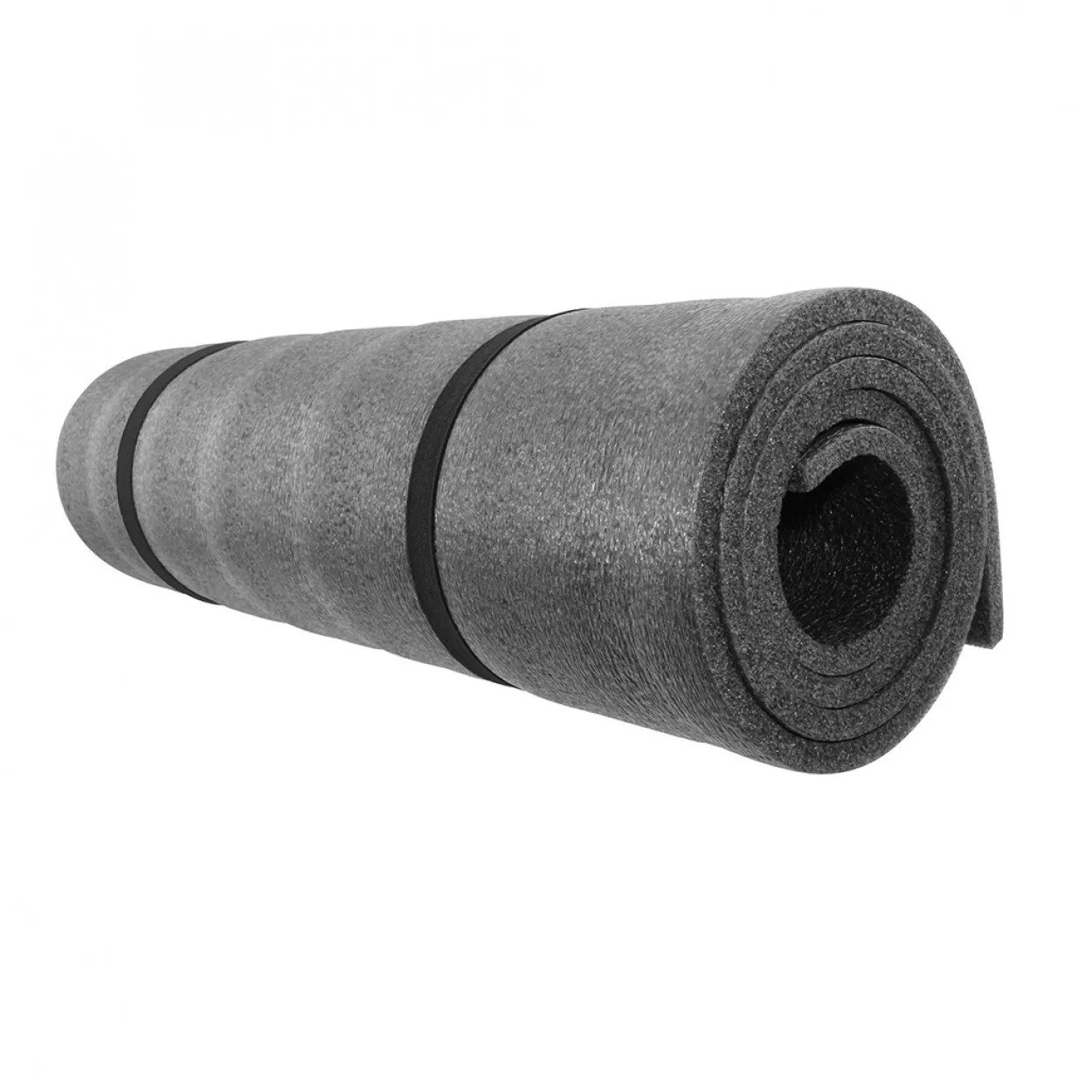
The Z Lite Sol is the opposite philosophy: no air, no valve, no failure mode. Fourteen ounces of closed-cell foam with an R-value of 2.0. That’s enough for summer and a fine booster layer under an air pad in winter. It folds into a compact bundle, straps anywhere on a pack, and survives anything short of a knife fight. It’s also the cheapest way to find out whether you actually need an expensive pad.
Be honest about comfort: three-quarters of an inch of foam is firm. Back sleepers adapt; side sleepers often don’t. But as a first pad, a loaner, or a winter layering piece under one of the air pads above, it’s the best value in the category.
Good fit if: you’re new to camping, you want a bombproof backup, or you need to boost an air pad’s R-value for winter.
Skip if: you’re a side sleeper buying your one and only pad, get an air pad instead.
Making it last
Air pads die from two things: punctures and moisture inside. Clear the ground before pitching, or use a footprint. Inflate with the included pump sack rather than your lungs. Breath moisture degrades the internal coatings over time. Store air pads unrolled with the valve open; long-term compression weakens the seals. Foam pads need nothing. Hose them off when they’re dirty.
For winter trips, layering beats buying: a Z Lite Sol under an XLite NXT gives you roughly R-6.5 for the weight of both, which is lighter than most dedicated winter pads. The foam also protects the air pad from the ground, which is the layer most likely to meet a sharp object.
A good night’s sleep pairs with good camp logistics. Once the sleep system is sorted, our portable fridge comparison covers keeping food cold, and the camp kitchen packing checklist makes sure nothing else gets forgotten.

Frequently asked questions
Can I use a higher R-value pad in summer?
Yes. Extra insulation doesn’t make you hot. It just stops mattering once the ground is warm. The penalty for overkill is weight and money, not comfort.
Do I need a pump sack?
For air pads, yes, use one. Lung moisture shortens the life of the internal reflective layers, and a pump sack inflates faster anyway. Both the XLite NXT and the Tensor include one.
How do I find a leak?
Inflate the pad, submerge sections in water (a bathtub works), and watch for bubbles. Mark the spot, dry it, and apply the included patch. Most leaks are pinholes at seams and take ten minutes to fix.
Are wide pads worth it?
If you turn in your sleep, yes. Twenty inches is narrow. Your arms fall off the edges. The jump to 25 inches costs a few ounces and changes the night meaningfully for restless sleepers.
How we research
Outwatt compares manufacturer-published specifications: R-values tested to the ASTM standard, weights, dimensions, and pricing as stated by the brands. We don’t run lab tests on camp gear. When a brand publishes a number, we report it; when it doesn’t, we say so.