
As an Amazon Associate, Outwatt earns from qualifying purchases made through links on this page, at no extra cost to you.
A portable fridge can change how you camp, but only if your battery can keep up with it. The trouble is that fridge spec sheets rarely speak plainly. One listing gives watts, another gives amps, a third gives only a temperature range, and almost none of them tell you how long the fridge will actually run on the battery you own. This guide translates those specs into plain language, so you can match a fridge to your power setup before you buy.
If you are still deciding between fridge types, start with our guide to compressor vs thermoelectric fridges. The power story is very different for each type, and it explains much of what follows.
Running watts, startup watts, and why only one matters most
Most portable compressor fridges list a rated power figure in watts, often somewhere between 35 and 60 watts for a mid-size model. That number describes the compressor while it is running. It does not describe the whole day, because a compressor cycles on and off. Once the box reaches its set temperature, the compressor rests, then kicks back in when the temperature drifts up. The share of time it spends running is called the duty cycle, and it is the single biggest factor in daily energy use.
Startup watts, sometimes called surge watts, matter only for the power source. A compressor briefly draws more current when it starts than when it runs steadily. A power station or inverter needs to handle that short surge, but the surge lasts seconds and adds almost nothing to total daily consumption. When you size a battery, use running watts and duty cycle. When you check compatibility, confirm the power source can handle the startup surge listed in the manual.
Watts, amps, and volts are the same fact in three forms
Listings switch between watts, amps, and volts, which makes comparison harder than it should be. The three are linked by one simple relationship: watts equal volts multiplied by amps. A fridge drawing 3.75 amps from a 12 volt supply is using 45 watts. The same fridge on a 24 volt supply draws about half the amps for the same watts. That is why a spec sheet can look different on two listings for the same model without anything actually changing.
When you compare two fridges, convert everything to watts first. Amps alone mislead, because an amp figure at 12 volts and an amp figure at 24 volts describe different amounts of power. Watts also feed directly into the runtime math in the next section, so converting early saves confusion later.
From watts to watt-hours: the runtime math
Batteries and power stations are rated in watt-hours, often shortened to Wh. One watt-hour is one watt drawn for one hour. To estimate how long a fridge runs, you need its average watts, not its rated watts. Multiply rated watts by the duty cycle to get average watts, then divide battery watt-hours by that average.
Take an example with round numbers. Suppose a fridge is rated at 45 watts and runs about 40 percent of the time in mild weather. Its average draw is 18 watts. On a 500 watt-hour power station, that works out to roughly 27 hours before the battery is empty. In practice you should plan a margin, because no battery delivers its full rated capacity to the fridge, and the fridge works harder as the weather gets hotter.
That margin is where most trip plans go wrong. A setup that looks fine on paper for a mild weekend can fall short on a hot afternoon, when the compressor runs far more often. Build your estimate for the hottest conditions you expect, not the mildest, and keep a reserve for phones, lights, and other gear sharing the same battery.
What actually moves the duty cycle
Four factors dominate how often the compressor runs. Ambient temperature comes first. A fridge holding 37 degrees in 90 degree heat works much harder than the same fridge holding the same temperature in 70 degree weather. Pre-chilling food and drinks before loading them helps, because the fridge then only maintains temperature instead of pulling warm food down to temperature.
How often you open the lid comes second. Every opening dumps cold air and lets warm air in, and a fridge opened for drinks all afternoon will cycle far more than one opened twice a day. Lid seal quality comes third. A warped or dirty seal leaks cold air constantly, and no spec sheet will warn you about it. Finally, set temperature matters more than people expect. Holding a freezer zone at zero degrees costs substantially more energy than holding a fridge zone in the high 30s, which is why dual-zone models deserve a closer look at their power figures.
Compressor, thermoelectric, and absorption: three very different appetites
Compressor fridges are the most efficient portable option for camping, and they are the only common type that can genuinely freeze food in hot weather. Their cycling compressor is also why the duty cycle math above applies to them. Thermoelectric coolers work differently. They use a solid-state module that runs continuously rather than cycling, so their average draw is close to their rated draw all day. That continuous draw is why a thermoelectric cooler can drain a car battery overnight even though its rated watts look modest.
Absorption fridges, common in RVs, run on propane, 12 volt power, or mains power depending on the model. On 12 volt power they tend to draw steadily and heavily, so they are a poor match for a small portable battery. If your plan is battery-powered camping, a compressor fridge paired with a correctly sized battery is the practical combination, and our solar panel sizing guide can help if you plan to recharge that battery from the sun.
Reading a spec sheet line by line
Start with the power input line. A fridge that accepts both 12/24 volt DC and mains AC power gives you the most flexibility, since you can run it from the vehicle while driving and from a power station at camp. Next, look for rated power or rated current, and convert to watts if needed. Then check the temperature range. A range that reaches below freezing tells you the box can freeze, but remember that freezing costs energy, so a model run as a freezer will not match the runtime of the same model run as a fridge.
Look for a battery protection setting, often labeled high, medium, and low. This setting cuts power to the fridge before it drains your vehicle starter battery too far. It protects the vehicle, not the fridge, and it is worth setting to medium or high when running from a starter battery. Finally, check whether the listing states power consumption per day. Some manufacturers publish a figure like kilowatt-hours per 24 hours at a stated ambient temperature. That figure is useful only if the test temperature is stated, since a test at mild room temperature flatters the result.
Matching the fridge to your battery
Work backwards from your trip. Decide how many hours the fridge must run between charges, then multiply your expected average watts by those hours to get the watt-hours you need. Add at least 20 percent headroom for heat, lid openings, and other devices. If the result is larger than your battery, you have three honest options: a smaller fridge, a warmer set temperature, or a bigger battery plus a way to recharge it.
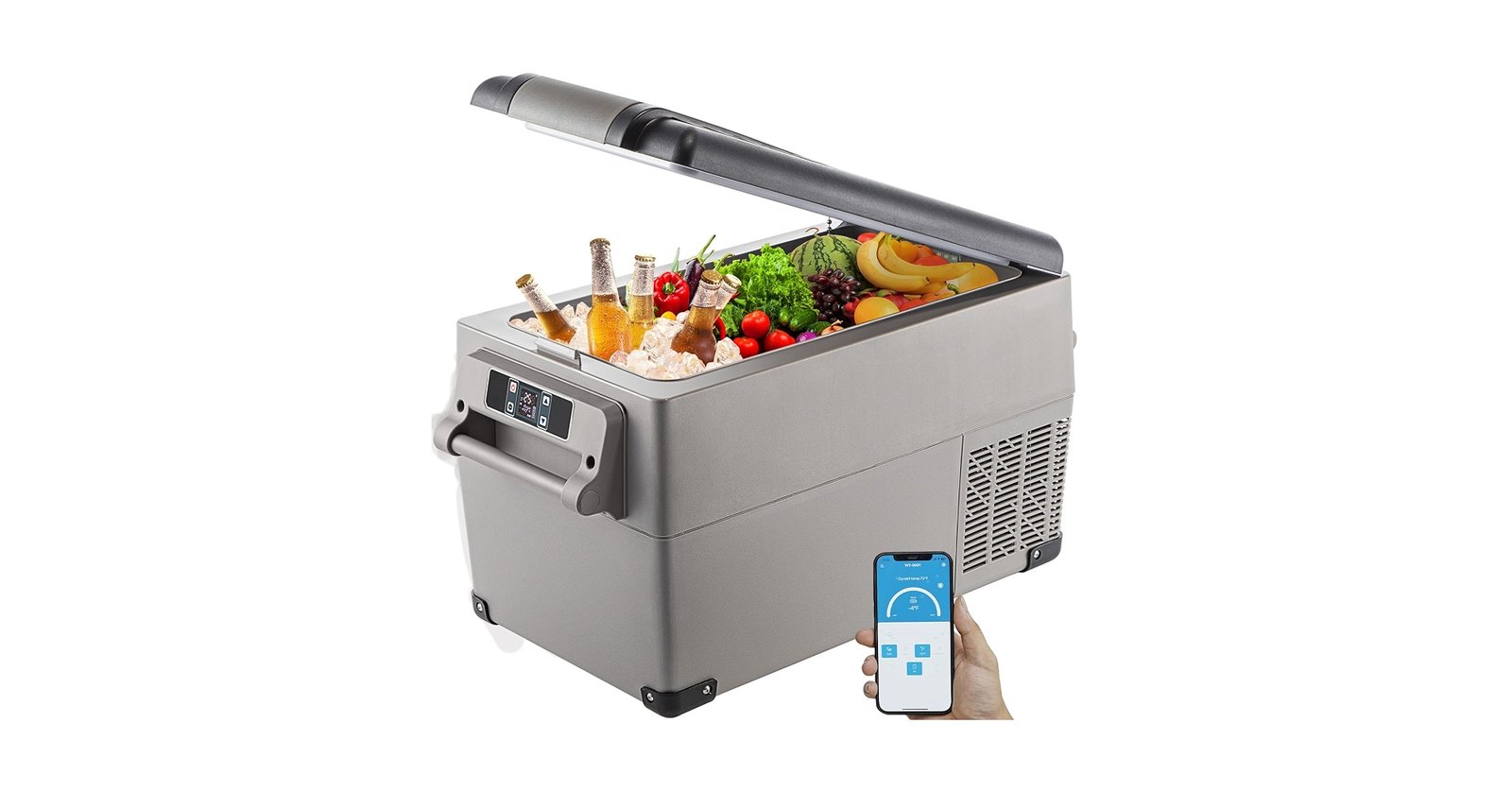
Consider the VEVOR CF35 dual-zone portable fridge, a 35 liter model with a published temperature range of minus 4 to 68 degrees Fahrenheit and 12/24 volt DC plus mains AC input. Its two zones let you run one side as a fridge and the other as a freezer, but running both zones cold raises average draw, so size your battery for the way you will actually use it, not for fridge-only mode. Check price on Amazon
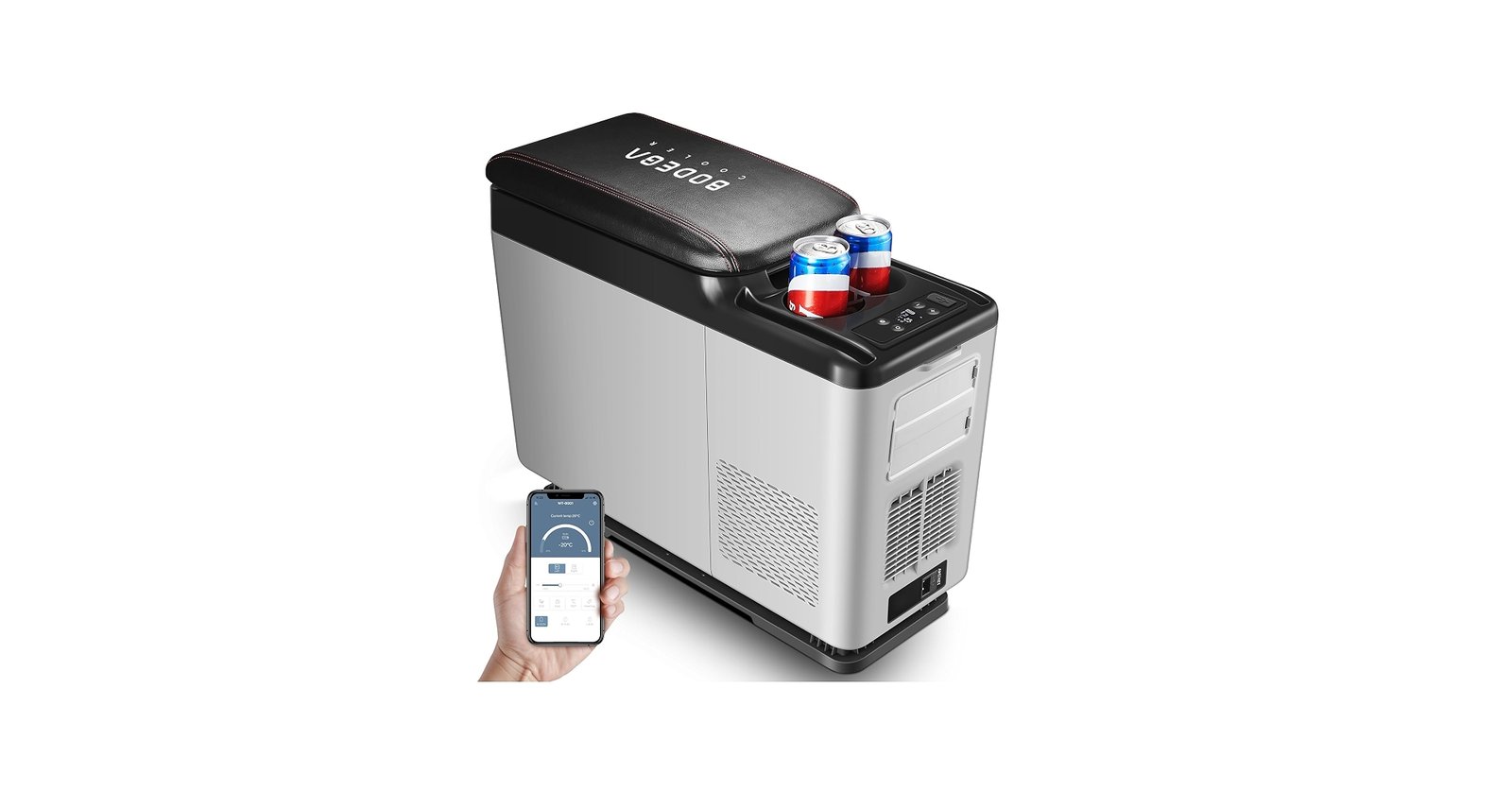
For shorter trips or smaller vehicles, a compact single-zone model keeps the power math simpler. The BODEGA 15 liter portable fridge publishes the same minus 4 to 68 degree temperature range with 12/24 volt DC input, in a box small enough to fit behind a seat. One zone, one set temperature, and a smaller interior to keep cold all point the same way: lower average draw and longer runtime from the same battery. Check price on Amazon
Power stations, solar input, and recharging while you camp
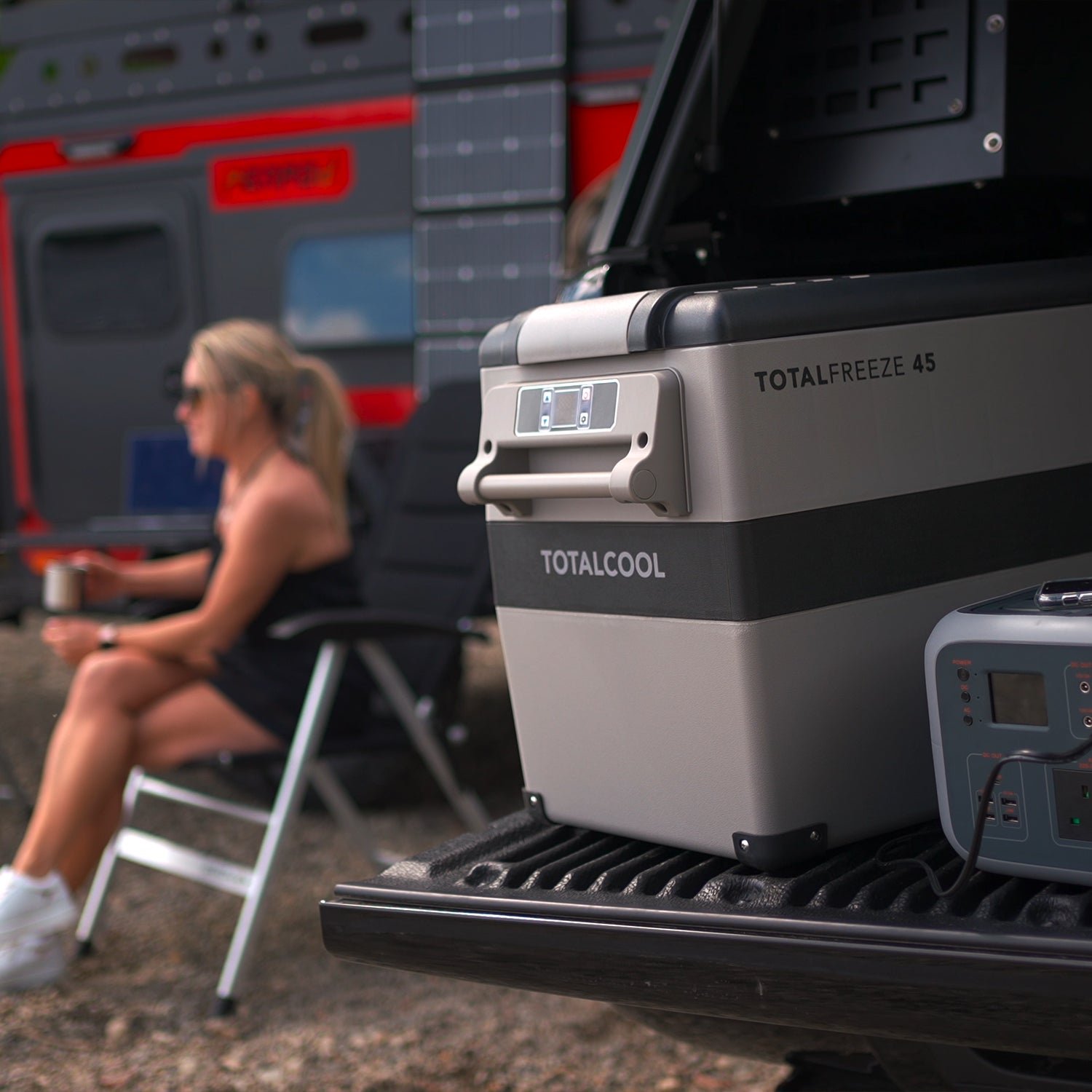
A portable power station is the usual camp power source for a fridge, and two of its specs matter most here. Capacity in watt-hours sets runtime, as above. Solar input in watts sets how fast the sun refills it. A station that accepts 200 watts of solar can, in good sun, replace several hours of fridge draw per day, which stretches a weekend trip well beyond what the battery alone would allow. Check both figures, not just capacity.
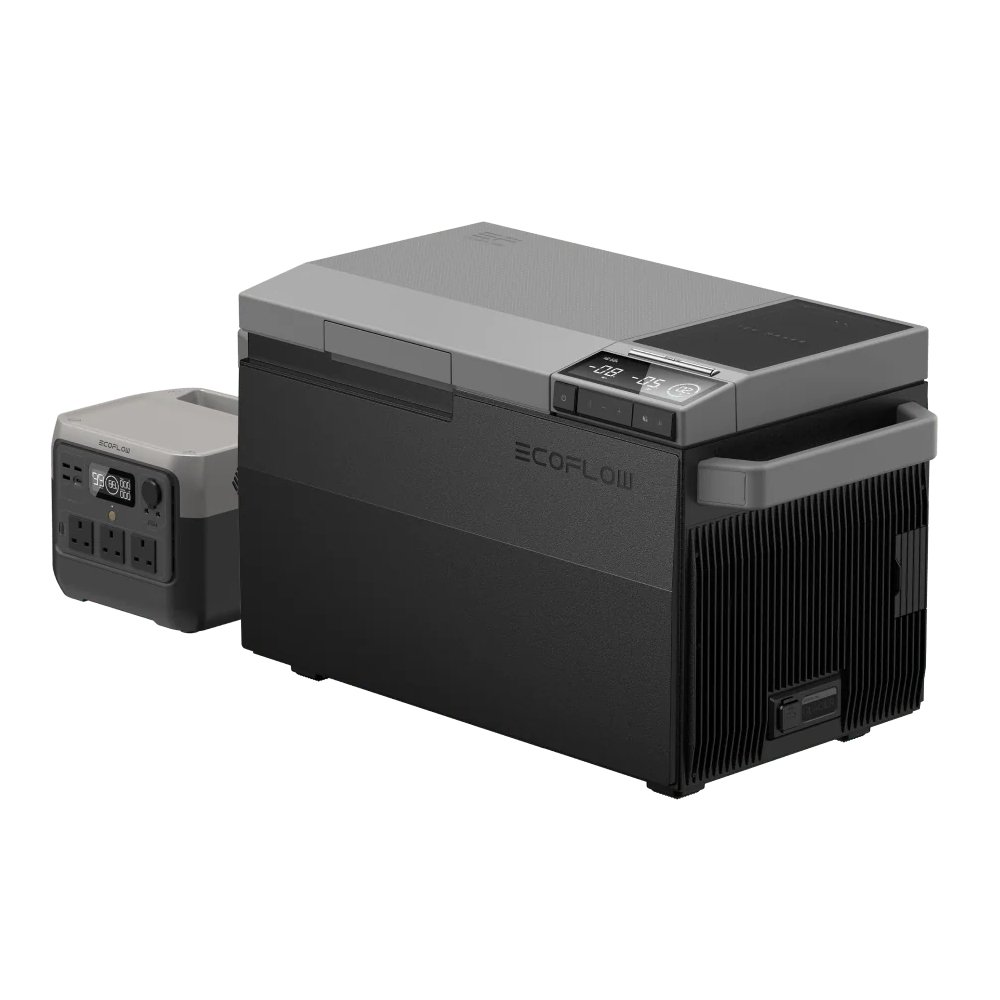
Also confirm the station has a 12 volt car-style outlet or a DC output the fridge can use. Running the fridge from the station’s AC inverter instead of its DC output wastes energy in conversion, sometimes 10 percent or more. The DC route is quieter on the battery and is the right default at camp. Pairing a fridge with a power station like an EcoFlow portable power station, which is designed to run 12 volt gear alongside USB and AC devices, keeps that DC path simple. Check price on Amazon
One more practical check: confirm the fridge cable reaches from the station to where the fridge sits, and that the station’s DC output stays live when its display sleeps. Some stations cut DC output on a timer, which can quietly warm a fridge overnight. A short test run at home, with the fridge loaded and the station running the way it will at camp, catches these surprises before they cost you a cooler full of food.
Comparison: how the fridge types stack up on power
| Fridge type | How it draws power | Best battery match |
|---|---|---|
| Compressor fridge | Cycles on and off; average draw well below rated watts | Portable power station sized by duty cycle math |
| Thermoelectric cooler | Runs continuously; average draw close to rated watts | Vehicle power while driving; poor match for small batteries overnight |
| Absorption fridge | Steady, heavy draw on 12 volt power | RV house battery or propane; not a small power station |
For a closer look at specific models in each type, the VEVOR dual-zone and BODEGA compact models above are a useful starting pair: one shows what dual-zone flexibility costs in power, the other shows what a small single-zone box saves. Check price on Amazon for the dual-zone model, or Check price on Amazon for the compact one.
Common mistakes worth avoiding
The most common mistake is sizing the battery from rated watts as if the compressor ran all day. That oversizes the battery and the budget, or, when people round the other way, undersizes it. The second mistake is trusting a runtime claim without a stated temperature. A claim tested in a cool room says little about a hot campsite. The third is forgetting that the battery also runs everything else. Lights, phones, and a fan all draw from the same watt-hours the fridge needs, so either budget for them or give the fridge its own battery.
Finally, do not skip the home test. Load the fridge the way you will load it for the trip, set your planned temperatures, run it from your actual battery, and note how far the battery drops in 24 hours. That one test replaces every estimate in this guide with a number measured on your own gear, and it is the most reliable sizing tool you own.
The short version
Convert specs to watts, estimate average draw with a realistic duty cycle, and divide battery watt-hours by that average. Plan for hot weather, keep a reserve, run the fridge from DC power at camp, and test the whole setup at home before the trip. A fridge that matches its battery is quiet, cold, and forgettable, which is exactly what camp refrigeration should be.