
Disclosure: As an Amazon Associate, Outwatt earns from qualifying purchases made through links on this page, at no extra cost to you. Links marked as affiliate links help support the site.
A camp lantern is the light you live with after dark. It lights the cooking area, the card game, and the walk back to the tent, and it stays on for hours while a headlamp would sit in a pocket. Buying one looks simple until you compare the boxes. One lantern promises 600 lumens and 180 hours, another promises 200 lumens and 6 hours, and both claims can be true at the same time. This guide explains the main camp lantern types, what lumens and runtime numbers really mean, and how to match a lantern to the way you camp.
What lumens tell you, and what they leave out
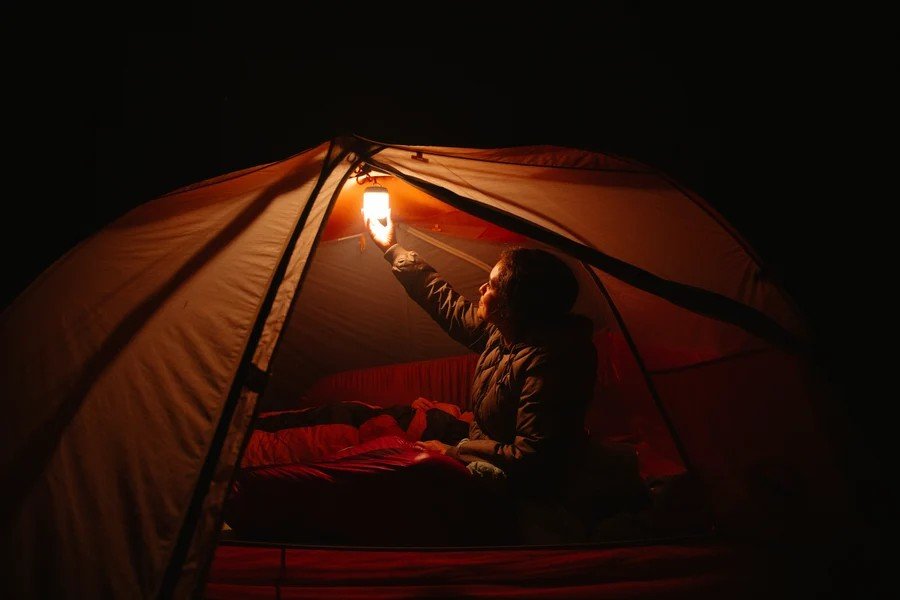
Lumens measure total light output. A higher number means the lantern puts out more light in total, but it says nothing about where that light goes. A lantern spreads light in all directions to fill a space, while a flashlight throws a beam in one direction. Two lanterns with the same lumen rating can look very different in camp, because one may use a frosted globe that softens the light and one may use a clear globe that shows bright points of light. The frosted globe usually looks kinder on the eyes at a table, even at the same lumen count.
Color temperature matters almost as much as brightness. Warm white light, around 3000 to 3500 Kelvin, feels like a household lamp and suits evenings at camp. Cool white light looks brighter and harsher, and it can feel clinical inside a small tent. Some lanterns let you change color temperature or dim smoothly, which is worth more in practice than a few extra lumens on the box. A lantern you can dim to a soft glow will stay on all evening without bothering anyone, while a lantern with one blinding setting will get switched off early.
Think of lumens as a ceiling, not a promise. The number on the box is the maximum output, usually on the highest setting with a fresh battery or a full charge. You will spend most of the evening on a lower setting, and that is where runtime comes in.
How runtime numbers are measured
Runtime is where lantern shopping gets confusing, because makers do not all measure it the same way. Under the ANSI FL1 standard used by many lighting brands, runtime runs until output falls to 10 percent of its starting value, measured shortly after switch-on. Other makers measure until the light reaches a minimum usable level, such as 0.25 lux at two meters, which is the method Black Diamond describes for its Moji line. Both methods are honest, but they produce very different hour counts for the same kind of light.
The practical lesson is to compare low-mode hours with low-mode hours, and high-mode hours with high-mode hours, never a low-mode number from one lantern against a high-mode number from another. A lantern rated for 180 hours on low and 2.5 hours on high is telling you that brightness costs power at a steep rate. Dimming to half brightness often more than doubles usable time, which is why a good dimmer is one of the most useful features on any camp lantern.
Cold weather shortens runtime for most battery types, and rechargeable cells lose charge slowly in storage. If a trip starts with a lantern that sat in a garage all winter, charge it fully before you leave, and carry a backup light for the first night.
The main camp lantern types
Most camp lanterns fall into four groups. The differences come down to power source, weight, and how much fuss you accept in exchange for light.
LED lanterns with disposable batteries
The classic camp lantern today is a small LED lantern that runs on AA or AAA cells. It is light, cheap to replace, and easy to keep as a spare, because the batteries are sold everywhere. The trade is running cost and waste: a lantern that eats through sets of alkalines on a long trip needs a steady supply of spares, and spent cells must be packed out. Disposable-battery lanterns suit short trips, car camping where weight hardly matters, and anyone who wants a backup light that works after months in a storage bin.
Look for a lantern with a real dimmer rather than just two or three fixed steps, and check whether it runs on common cell sizes. A lantern that needs an unusual cell size is a poor backup light, because you cannot borrow spares from another device at camp.
Rechargeable LED lanterns
Rechargeable lanterns carry a built-in lithium battery charged over USB. They cost more up front but cost almost nothing per night after that, and they pair well with the power banks and solar panels many campers already carry. Our solar panel wattage guide for camping explains how to size a panel for charging lights and phones together. A Check price on Amazon search for rechargeable camp lanterns shows how many now include a USB output, so the lantern can top up a phone in a pinch.
The weakness of a rechargeable lantern is the end of its charge. When the battery runs out, the lantern is done until you can recharge it, so check the high-mode runtime, not just the low-mode headline. A lantern with 200 hours on low but only 5 hours on high will still go dark during a long evening of cooking and cards if you leave it on full brightness. Some rechargeable models add a hand crank or a small solar panel for emergencies. A crank will not replace a full charge, but it can buy enough light to find your way back to the tent.
Propane and gas lanterns
Gas lanterns burn propane or liquid fuel through a fabric mantle that glows white hot. They put out a large amount of warm light and run for many hours on one fuel canister, which is why they remain popular for base camps and large group sites. A Check price on Amazon search for propane camp lanterns shows models sized for table use and for hanging over a whole cooking area.
Gas lanterns need more care than LED models. Mantles are fragile and must be replaced when they tear, the glass globe can break in transit, and a gas lantern gives off heat and carbon monoxide, so it belongs outside, never inside a tent. If you camp mostly in tents and small sites, an LED lantern is simpler and safer. If you run a big base camp and want one bright light over the kitchen area, gas still earns its place. Our camp stove fuel guide covers how propane canisters behave in cold weather, which applies to gas lanterns too.
Solar and hand-crank lanterns
Solar lanterns charge from a built-in panel during the day, and collapsible solar lanterns pack flat when empty, which makes them popular with backpackers and emergency kits. Their output is usually modest, and a cloudy day means a dim night, so treat solar as a supplement rather than your only light on a trip where you need reliable brightness. Hand-crank lanterns work on the same principle: a minute of cranking buys a few minutes of light. They are best kept as backup lights, not primary camp lights.
Two published examples, side by side
Published specs show how far apart two good lanterns can sit. The table below uses figures from the makers themselves, so the comparison is on their own terms. Prices are left out on purpose: check current listings before buying, since prices change often.
| Lantern | Max output | Power | Published runtime |
|---|---|---|---|
| Black Diamond Moji+ | 200 lumens | 3 AAA cells or a rechargeable BD 1500 battery | Low 120 hours, medium 10 hours, max 6.5 hours on the rechargeable battery |
| Goal Zero Lighthouse 600 | 600 lumens | Built-in 5,200 mAh lithium battery, USB, solar, or hand crank | Both sides lit: low 180 hours, high 2.5 hours; one side lit: low 320 hours, high 5 hours |
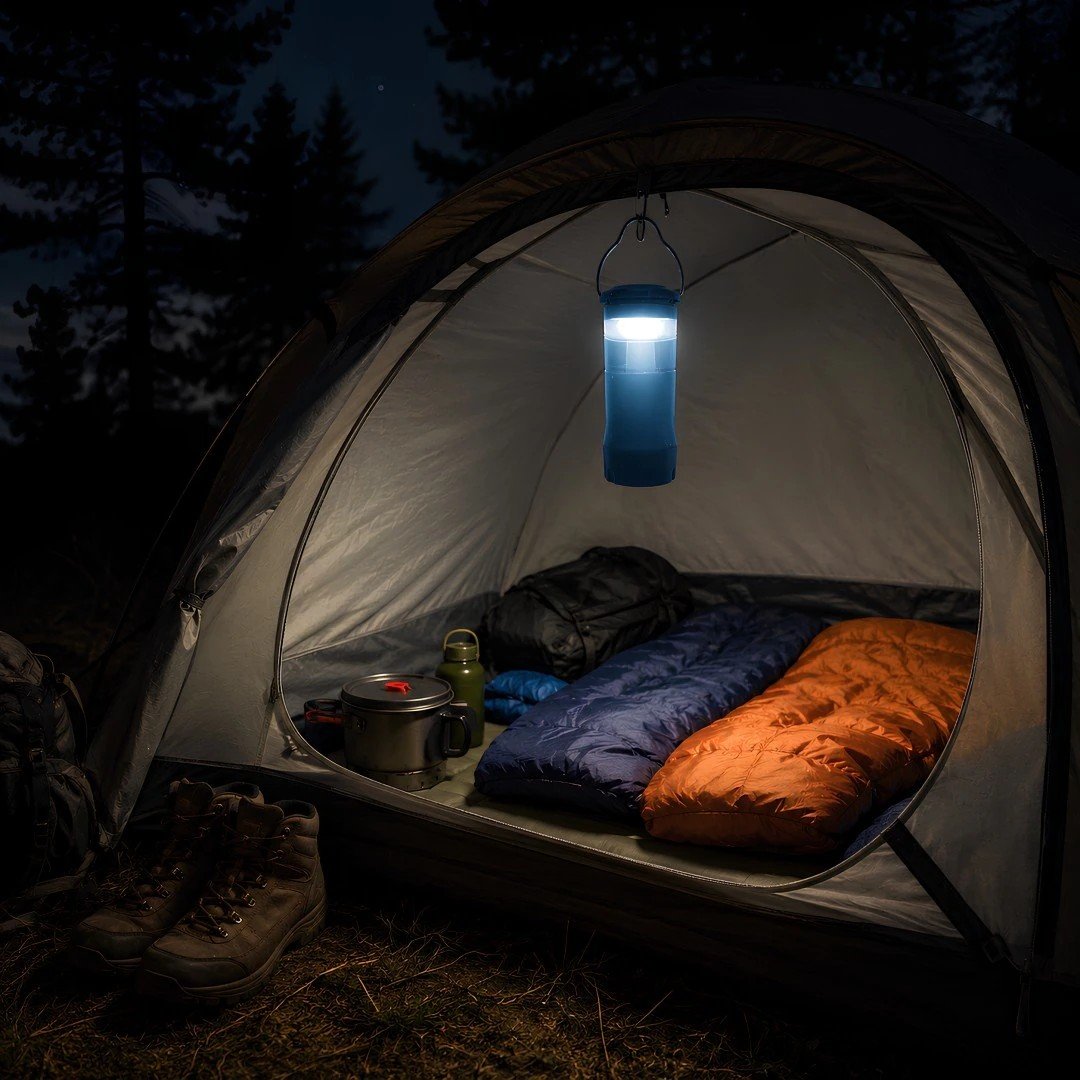
The Moji+ is a pocket-sized tent light. Its maker rates it at IPX4, which means it withstands rain and splashes from any angle, and its double-hook hang loop lets it hang from a tent loop or a branch. The Lighthouse 600 is a base-camp light: three times the maximum output, a battery that doubles as a phone charger, and legs that fold out so it can stand on uneven ground. A Check price on Amazon search for the Moji lantern and a Check price on Amazon search for the Lighthouse 600 show the size and price gap between a tent light and a base-camp light.
Neither lantern is better in the abstract. The right one depends on whether you need a small light inside a tent or a large light over a whole cooking area, and on how you plan to recharge or resupply it.
How many lumens do you need
Use these ranges as a starting point, not as rules. Your eyes adjust to the dark, so less light goes further at camp than it does at home.
- A small tent or a reading light: roughly 100 to 200 lumens is plenty, and a dimmer matters more than a higher maximum.
- A picnic table for cooking and eating: roughly 200 to 400 lumens covers the table and the people around it.
- A large group site or a base-camp kitchen: roughly 400 to 800 lumens, or two smaller lanterns placed apart, lights the area without one harsh hotspot.
Two smaller lanterns often beat one big one. Light from two directions softens shadows, lets people sit on both sides of a table, and gives you a spare if one lantern dies. A lantern hung above head height lights a wider area than one sitting on the table, but it also shines into eyes, so hang it to one side of the seating area rather than directly overhead when you can.
Weather, hanging, and campsite use
Check the water resistance rating before trusting a lantern in rain. IPX4 means splash resistant from any angle, which covers normal rain. A lantern with no rating at all may still survive a shower, but you have no promise to lean on. Keep the charging port covered when a rechargeable lantern sits out in rain, since a wet USB port is the most common cause of charging trouble after a storm.
Hang a lantern from a hook, a branch, or a tent loop when you want area light, and set it on a table when you want task light. A lantern that does both, with a hook that folds away, is more useful than one that only stands. Keep any fuel lantern outside the tent and away from tent fabric, and never sleep with a gas lantern burning. LED lanterns are safe inside a tent, which is one more reason they suit most campers better.
At night, dim light also means fewer insects around the table. Bright white light attracts bugs, so turning a lantern down once cooking is done makes the rest of the evening more comfortable, and stretches the battery at the same time.
What to check before you buy
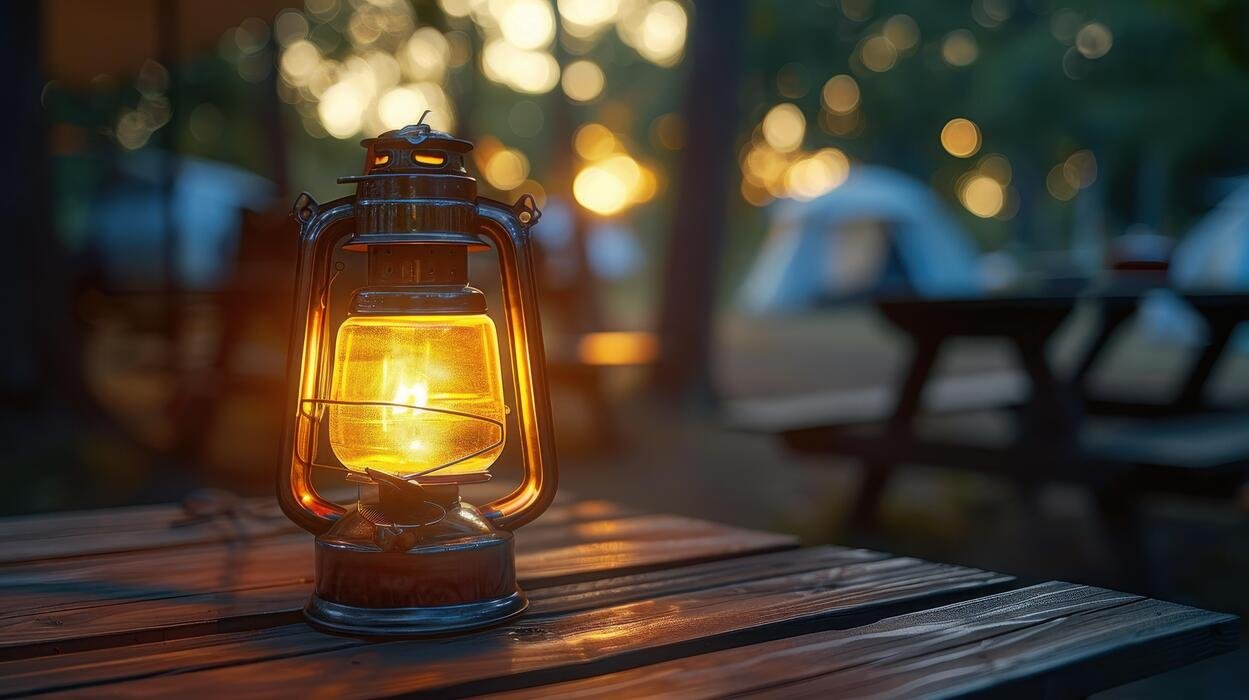
Run through this list against any lantern you are considering, and skip models that fail on the points that matter for your trips.
- High-mode and low-mode runtime, measured on the same basis, not just one headline hour count.
- Power source and resupply: common cells you can buy anywhere, or a USB battery you can recharge from a power bank.
- A dimmer you can operate with cold hands, and a switch that cannot turn on by accident in a pack.
- Weight and packed size, including batteries or the fuel canister, not just the lantern body.
- Water resistance rating, and whether the charging port has a cover.
- Hanging options: a hook, a loop, or a bail handle that fits your tent loops and branches.
- Color temperature: warm white for evenings at camp, or an adjustable setting if you want both.
For ground sleeping under the same trips, our camping sleeping pad buying guide covers the other half of a comfortable night: insulation and packed size for the pad you sleep on.
Picking the right lantern for your trip
For backpacking, take a small rechargeable or AAA lantern around 100 to 200 lumens, with a hook for hanging in the tent. Weight matters more than maximum brightness, and a dimmer stretches a small battery across several nights.
For car camping, take a larger rechargeable lantern in the 400 to 600 lumen range, plus a small backup light. You can recharge from the car or a power bank, and the extra brightness covers cooking and group seating.
For base camps and large groups, pair a bright area light, whether LED or gas, with one small lantern per tent. The area light covers the kitchen, the small lights cover sleeping areas, and no single failure leaves the whole camp dark.
For emergency kits, keep a hand-crank or solar lantern with a radio if you want one, and store disposable-battery lanterns with the batteries removed so they cannot leak in storage. Check both once a season, and charge rechargeable models every few months, since lithium cells lose charge slowly even when unused.
The short version
Lumens set the ceiling, runtime sets how long you can enjoy it, and the power source decides how you recover when the light runs out. Compare low-mode hours with low-mode hours, check high-mode runtime before you buy, and favor a good dimmer and a warm color over the biggest number on the box. Match the lantern to the trip: small and light for the trail, bright and rechargeable for car camping, and two lights rather than one whenever the camp is big enough to need them.
1 thought on “Camp Lantern Types: Lumens, Runtime, and How to Choose”